
Reviewed · WALKING TOURS
Mexico City: Historic Downtown Walking Tour
Mexico City’s historic center is easiest to understand when you can see its layers at once: Aztec temples under Spanish churches, grand government buildings beside street vendors, and centuries-old traditions still worked into daily life. This three-hour walk takes you through that stack of history, with stops inside the Metropolitan Cathedral and the remarkable Post Office Building.
I like the route for two reasons. First, it gives you a fast but meaningful introduction to the city, from ancient Mexico-Tenochtitlan to modern Mexico. Second, the bakery stop and practical food advice add ordinary local life to the famous monuments. The main drawback is noise: vendors, music, and traffic can make it hard to hear, especially if your guide does not use a microphone.
Key points to know
- A three-hour history lesson on foot: You cover the major sights of Centro Histórico without spending time on a bus.
- Inside access matters: The cathedral and Post Office Building are more interesting from within than from the street.
- The Zócalo connects the story: This huge square links Mexico City’s Aztec, colonial, religious, and civic past.
- Templo Mayor is more than a photo stop: You see the exposed ruins of the ancient Aztec city, though the tour does not provide a full museum visit.
- The bakery adds a tasty local detail: You can see the wide range of Mexican sweet breads and taste one if you wish.
- Guides shape the experience: Emiliano, Mar, Nadia, Dani, Arturo, and others are praised for clear explanations, warmth, and practical advice.
Starting at the Zócalo, the heart of Mexico City
The meeting point is in front of the McDonald’s on the Zócalo, Mexico City’s enormous main square. Look for the white umbrellas used by Mexico a Pie Walking Tours. The location is easy to find on Google Maps by searching Meeting Point Mexico a Pie, but give yourself time to get there. The center can feel confusing at first, and arriving late may mean searching for the group.
The morning tour begins at 9:30 a.m., with the guide waiting a few minutes beforehand. The afternoon tour begins at 4:30 p.m. You provide a valid cellphone number, which is useful if you need help finding the group. One participant who got lost on the metro was able to catch up with help from the guide through WhatsApp, so keeping your phone charged is sensible.
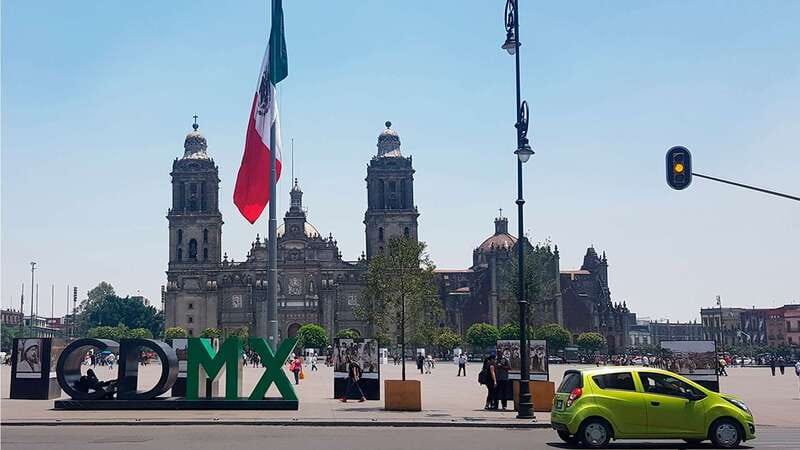
The Zócalo is an excellent place to begin. It is not just a broad public square for photographs. It is the city’s main stage, surrounded by the cathedral, the National Palace, government buildings, and layers of public life. Your guide uses the square to explain how the modern capital grew from the Aztec city and the Spanish colonial capital that followed it.
This is also where you begin to understand the scale of downtown. The square is huge, open, and often exposed to the sun. Wear sunscreen, bring sunglasses, and listen for advice about shaded spots. Guides such as Mar and Maria were especially careful about keeping groups out of direct sun when possible.
A few more things to do in Mexico City worth a look
- Historic Downtown Walking Tour
★ 5.0 · 1,289 reviews - Historic Center Food Tour in Mexico City
★ 5.0 · 1,263 reviews - Walking Tour of the Historic Center of Mexico City
★ 5.0 · 870 reviews
Entering the Metropolitan Cathedral
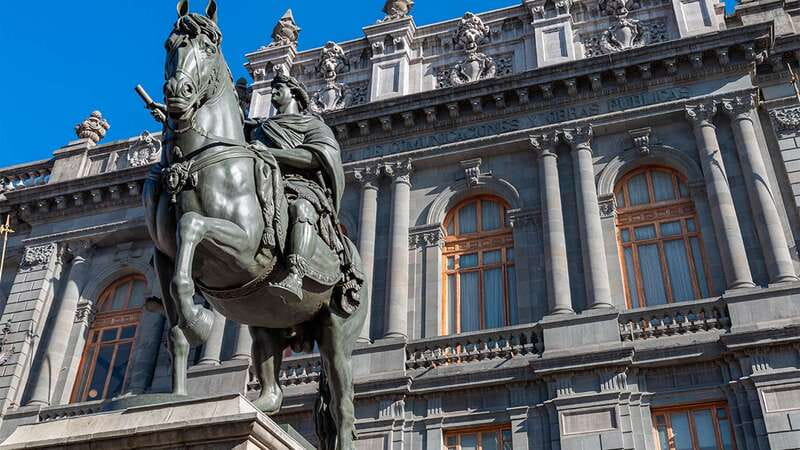
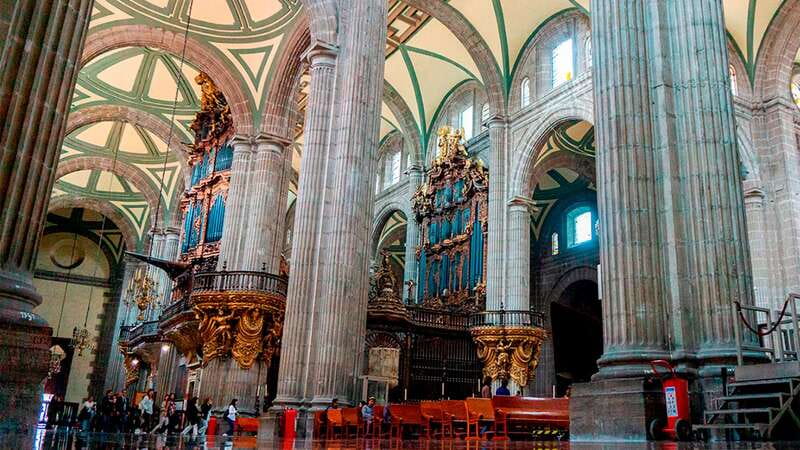
The first major interior stop is the Metropolitan Cathedral, a vast church that was the biggest in the Americas for more than three centuries. The building gives you an immediate lesson in the power of colonial Mexico, both religious and political.
Inside, expect time to look at the architecture and hear how the cathedral fits into the city’s larger story. The guide also points out the resting place associated with Hernán Cortés, the Spanish conqueror. That detail can lead to a useful discussion of conquest, religion, and the difficult meeting of Spanish and Indigenous worlds.
The cathedral stop calls for a little respect and patience. This is an active religious site, not simply an attraction, and the most effective guides keep the tone quiet and appropriate. Daniella was specifically appreciated for encouraging a respectful attitude inside the church.
The downside is that the tour may spend more time in the cathedral complex or its museum area than you prefer. If you are mainly interested in art museums, you may wish for more time at the Palace of Fine Arts or another gallery. That is a fair tradeoff for a first visit, but it is worth knowing before you book.
Seeing the Aztec city beneath modern Mexico City
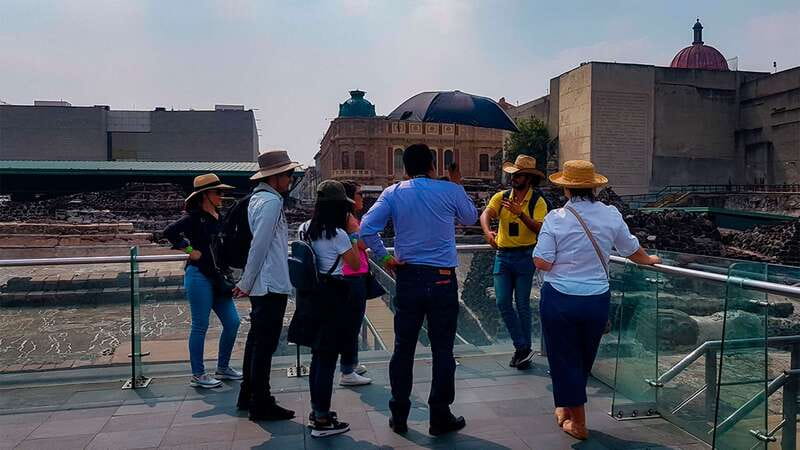
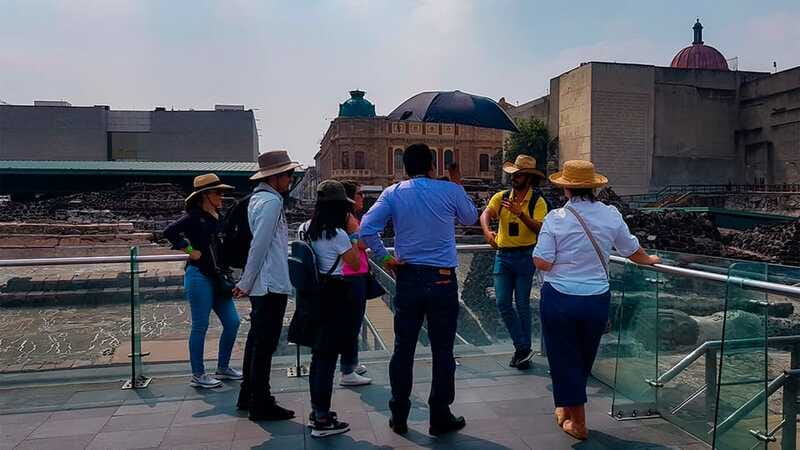
Near the Zócalo, the tour stops beside the remains of the ancient Aztec city, generally known as Templo Mayor. The exposed stone ruins make one fact impossible to miss: the Spanish capital was built directly over the Aztec capital.
This is one of the most valuable moments on the route because it turns an abstract history lesson into something visible. You can look at the ruins while standing among the later cathedral and colonial streets. The city’s past is not tucked away in a distant archaeological park. It is under your feet in the center of town.
You should set your expectations carefully. The walk provides an introduction and a view of the ruins, but it does not function as a full visit to the Templo Mayor archaeological site and museum. One guide allowed roughly ten minutes at the area, which was enough for context but not enough to explore every section. If ancient Mexico is a priority, return later with separate admission and more time.
That limitation is not necessarily a weakness. A three-hour walking tour has to keep moving, and the route covers several major buildings. Still, make a note of Templo Mayor so you can plan a return visit instead of assuming you have seen the whole site.
The Post Office Building and Mexico City’s grand interiors
The Palacio Postal, or Post Office Building, is one of the route’s most rewarding stops. From outside, it can be easy to treat it as another grand downtown building. Inside, the elaborate metalwork, polished surfaces, decorative details, and ornate staircase make it clear why this building receives so much attention.
This stop also gives the tour a useful change of pace. The cathedral shows religious power. Templo Mayor shows the ancient city. The Post Office Building reveals the ambition and confidence of a later era, when public architecture was designed to impress ordinary people as well as officials.
Your guide can help you notice details you might otherwise walk past. That is the practical value of a local guide in a city center filled with ornate facades. You get more than a list of dates. You learn which details deserve a closer look and how each building fits into the city’s development.
The building is also a good indoor pause during a sunny morning or afternoon. Even so, the tour remains active and should not be treated as a slow museum visit. You will be moving between stops, listening while standing, and sharing the space with regular city activity.
Same base, a different sort of day:
- Teotihuacan, Guadalupe Shrine & Tlatelolco Day Tour with Lunch
★ 5.0 · 11,603 reviews - Xochimilco, Coyoacan and Frida Kahlo with Optional Lunch
★ 4.5 · 7,320 reviews - Balloon flight + Breakfast in cave + Pyramids + Pick up CDMX.
★ 5.0 · 6,335 reviews - Teotihuacan pyramids morning or afternoon without tourist traps
★ 5.0 · 6,186 reviews
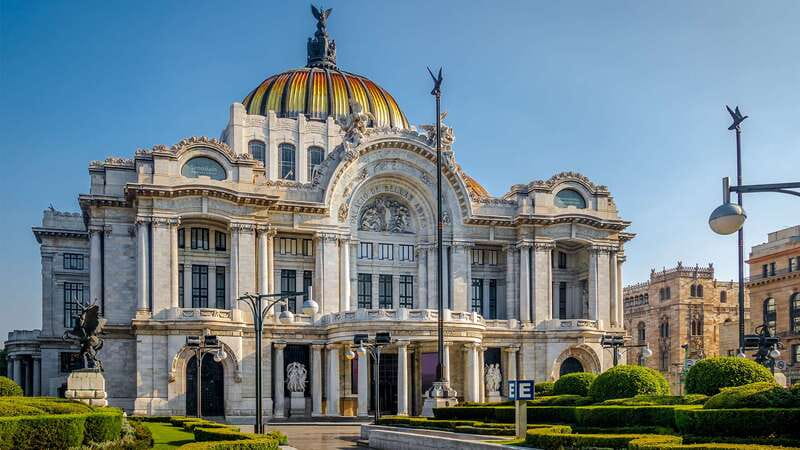
Admiring the Palace of Fine Arts
The Palace of Fine Arts brings another architectural style into the walk. Its exterior is immediately impressive, and the guide explains why it matters within Mexico City’s cultural life and downtown identity.
The route focuses on the building and its role as a landmark rather than giving you a long art museum visit. That distinction matters. If you want to study murals or spend time in galleries, set aside another visit. The walking tour is better at helping you recognize the building and understand its place in the center.
I like having this stop after the cathedral, ruins, and Post Office because the variety keeps the three hours moving. You are not looking at one type of monument again and again. The walk shifts from Indigenous archaeology to colonial religion, civic architecture, and the city’s arts scene.
A department store with a stained-glass ceiling
One of the more unexpected stops is an impressive department store with an extravagant stained-glass ceiling. This is exactly the kind of place you might miss if you followed only a standard list of major monuments.
The ceiling turns a practical commercial building into an architectural stop. It also shows how Mexico City’s beauty is not limited to churches and official palaces. Shops, hotels, cafes, and department stores can carry their own history and design value.
This is a good reminder to look up as you walk. Downtown streets can pull your attention toward traffic, signs, and vendors at ground level. A guide who points out upper-floor details helps you see more of the city than you would on your own.
Mexican sweet bread at the traditional bakery
The bakery visit gives the tour a welcome everyday detail. Inside, you see the large range of typical Mexican sweet breads, with the option to taste something if you like. The experience is not presented as a full meal, and food and drinks are not included in the tour price, so bring money if you want to buy something.
I especially like this stop because it connects history with routine. Churches and ruins explain where Mexico City came from. A bakery shows how people eat, shop, and carry on with the day now.
The food advice continues beyond the bakery. Guides have offered useful tips about tacos, places to eat and drink, and other things to see nearby. That makes the walk more useful after it ends. You can use the rest of your day with a better sense of where to go, rather than simply collecting photographs.
What the guides do well, and where the tour can falter
The guide is the key variable. The strongest guides on this route include Emiliano, Mar, Nadia, Dani, Arturo, Daniella, Andrés, Alex, Lily, and Maria. Their shared strengths are clear explanations, an easy manner, attention to safety, and the ability to connect ancient history with modern Mexico.
Emiliano is often praised for a relaxed and friendly delivery, while Nadia is valued for her storytelling and broad knowledge of Mexico City. Mar is especially good at answering questions, finding shade, and offering food suggestions. Dani is described as energetic and effective at keeping the group moving.
The pace is generally brisk but manageable. You cover a lot in three hours, and the route is designed to give first-time visitors a strong orientation. You will not have unlimited time at each monument. The reward is range. The compromise is depth at individual sites.
Sound is the clearest practical concern. Downtown has street vendors, music, traffic, and crowds. One participant found it difficult to hear even though the guide worked hard. If you have hearing trouble, stay close to the guide and ask for a position near the front. The company may also want to improve its audio setup, but no microphone or speaker is listed as part of the experience.
Price, walking demands, and who gets the most value
At $26 per person, this is a good-value introduction if you are new to Mexico City. The price includes the three-hour walk and local guide, but not transportation, food, drinks, or admission for a separate return visit to Templo Mayor. You are mainly paying for orientation, interpretation, and access to places that are easy to pass without understanding.
I would take this tour near the start of a Mexico City stay. It gives you a map in your head, a basic timeline, and practical ideas for eating and exploring afterward. Solo visitors also get an easy way to share the center with a group without committing to a full-day excursion.
Bring comfortable shoes. The tour operates rain or shine, so wear clothing suited to the forecast and bring sun protection. Baby strollers are not allowed, and the tour is not recommended for people with strollers.
There is conflicting information about mobility access. The activity details describe the tour as wheelchair accessible, but the suitability information says it is not suitable for wheelchair users. Contact the provider before booking if you use a wheelchair or need step-free access, since the route includes historic buildings and city sidewalks.
Cancellation is flexible: you can cancel up to 24 hours ahead for a full refund, and the reserve-now, pay-later option keeps your plans open. Those terms are useful if your Mexico City schedule is still shifting.
Should you book the historic downtown walk?
Book it if you want a strong first look at central Mexico City rather than a single museum visit. You will see the cathedral, Zócalo, Aztec ruins, Post Office Building, Palace of Fine Arts, stained-glass department store, and bakery in one well-packed outing.
I would especially recommend it for first-time visitors, solo visitors, and anyone who wants history explained in plain language. It is also a smart choice if you have only a few days and need to get your bearings quickly.
Skip it if you dislike group walking tours, need long quiet stops at each site, or mainly want to explore museums at your own pace. Also think twice if loud streets make it hard for you to follow spoken explanations.
For most people, the $26 price is justified by the route and the guide’s local context. Stay near the front, bring water and sun protection, and plan to return to Templo Mayor or the Palace of Fine Arts if either deserves more time. That approach gives you both the broad picture and the deeper visits the three-hour schedule cannot provide.
FAQ
How long is the Mexico City Historic Downtown Walking Tour?
The tour lasts three hours. Check the available dates for the exact morning or afternoon starting time.
Where does the tour meet?
Meet in front of McDonald’s in the Zócalo Main Square. Look for the white umbrellas marked for Mexico a Pie Walking Tours, or search Meeting Point Mexico a Pie in Google Maps.
What languages are available?
The live guide is available in English or Spanish.
Does the tour enter the Metropolitan Cathedral?
Yes. The route begins inside the Metropolitan Cathedral and includes an explanation of its importance.
Is food included?
No. Food and drinks are not included, though the route visits a traditional Mexican bakery where you can see the bread selection and taste something if you choose.
Does the tour visit Templo Mayor?
The walk stops beside the ruins of the ancient Aztec city and explains their importance. It does not provide a full archaeological-site and museum visit, so you may want to return separately.
Can I cancel the booking?
Yes. You can cancel up to 24 hours before the tour for a full refund. A reserve-now, pay-later option is also available.
Just added in Mexico City
- Mexican Wrestling: Experience Lucha Libre in Mexico City★ 4.0 · 228 reviews
- Tolantongo Caves Hot Springs & Waterfalls Small Group Tour★ 4.5 · 254 reviews
- Cuernavaca and Taxco Tour from Mexico City★ 4.0 · 88 reviews
- Mexico City: Taxco & Cuernavaca Tour with Pre-Hispanic Mine★ 4.6 · 271 reviews
- A Night of Tacos and Mezcal in Mexico City★ 5.0 · 262 reviews
- Mexico City: Tequila and Mezcal Museum Tour with Tasting★ 4.8 · 301 reviews
- From Mexico City: 10-Hour Cuernavaca and Taxco Tour★ 4.0 · 133 reviews
- Street Food Tour with Friends★ 5.0 · 326 reviews
Walking Tours, compared.


![Frida Kahlo VIP [Museum Tickets Included] Walk, Markets & Churros](https://4.mexicantourreviews.com/wp-content/uploads/frida-kahlo-vip-museum-tickets-included-walk-markets-churros-400x267.jpg)
Frida Kahlo VIP [Museum Tickets Included] Walk, Markets & Churros
Read our review →

Puerto Vallarta’s Best Canopy Zipline + Jorullo Bridge walk!
Read our review →
Historical and Cultural Walking Tour of San Miguel de Allende
Read our review →
Tacos and Tequila Walking Tour with Taste of Miguel
Read our review →
Historical and Cultural Walking Tour of San José del Cabo
Read our review →Browse the lists this tour appears in