
Reviewed · WALKING TOURS
Walking Tour of the Historic Center of Mexico City
Mexico City’s historic center makes the most sense when you see its layers side by side. This small-group walk links the Aztec world of Templo Mayor with Spanish colonial power, 20th-century murals, grand public buildings, and the daily life of today’s city. With a maximum of 10 people, the guide can usually keep the group together and make room for questions.
I like the way the route connects architecture to politics, food, religion, indigenous languages, and the Day of the Dead rather than treating each building as an isolated sight. I also like that you enter the Ministry of Education to see Diego Rivera murals, not just admire famous facades from the pavement.
The main drawback is the amount of walking. Cobblestones, crowds, sun, and Mexico City’s elevation can make three hours feel long, especially for anyone who needs frequent seats. The route also covers a lot, so you get a broad introduction rather than a detailed visit to every museum or monument.
Key things to know before booking
- A small group capped at 10: This is a better setup for questions and street crossings than a large coach-style walk.
- A useful pre-Hispanic and colonial link: Templo Mayor, the Zócalo, Santo Domingo, and colonial palaces show how Mexico City developed in layers.
- Diego Rivera murals indoors: The Ministry of Education visit is one of the strongest parts of the route and includes more than a quick exterior explanation.
- English-speaking guides with personality: Fernanda, Alexia, Luis, Nat, Benjamin, and others have led recent departures, with humor and local stories often shaping the experience.
- A three-hour orientation, not a museum tour: You will see many important places, but most stops are short and several buildings are explained from outside.
- A central finish: The walk ends near the Palace of Fine Arts and the House of Tiles, making it easy to continue sightseeing on your own.
Why this is a good first look at Mexico City
Mexico City can be hard to read at first. The Zócalo feels enormous, the streets shift from formal government buildings to busy shopping lanes, and ancient ruins appear beneath modern pavement. This walk gives you a simple way to connect those pieces.
The central idea is the meeting of two cultures, though the story is more complicated than a neat Spanish and indigenous split. You hear about the Mexicas, the Spanish conquest, the viceroyalty of New Spain, the struggle for independence, the Revolution, and modern Mexican life. Guides also bring in subjects such as food, music, politics, indigenous languages, and social change.
That range is the tour’s real value. You are not paying for long indoor visits at each stop. You are paying for a guide who can explain why a square matters, point out details you might miss, and help you decide where to return later.
The group limit of 10 matters here. Mexico City’s center can be crowded, and a guide needs to keep people together while crossing streets and moving around busy plazas. A smaller group also makes it easier to ask about a mural, a building, or a detail that catches your eye.
Recent guides have included Fernanda, Alexia, Luis, Nat, Benjamin, Sarah, Gabby, Oscar, Thomas, and Eduardo. The exact guide depends on the departure, but the strongest feedback centers on clear English, humor, patience, and a genuine connection to Mexico City. Luis, in particular, is known for offering useful recommendations beyond the walk, while Fernanda has been praised for mixing modern humor with local history.
A few more things to do in Mexico City worth a look
- Historic Downtown Walking Tour
★ 5.0 · 1,289 reviews - Historic Center Food Tour in Mexico City
★ 5.0 · 1,263 reviews - Mexico City: Historic Downtown Walking Tour
★ 4.8 · 1,039 reviews
Starting beneath the National Palace at the Zócalo
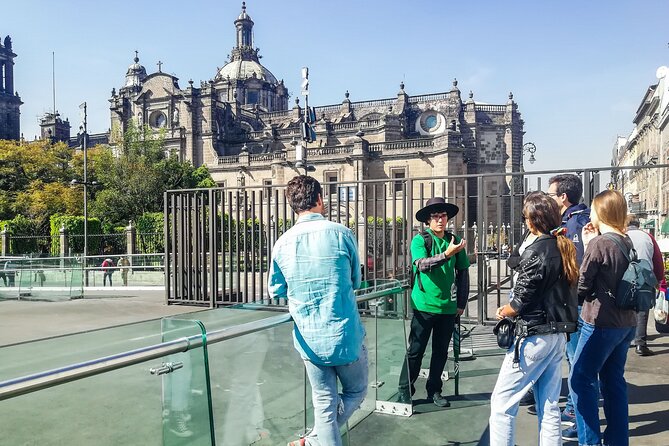
The tour begins at Plaza de la Constitución, usually called the Zócalo. This is the right place to begin because it presents Mexico City on a grand scale. The square is surrounded by major civic and religious buildings, including the National Palace and the Supreme Court of Justice, with shops and historic streets nearby.
Your guide uses the square to explain the city’s political and architectural center. You may also hear about the silversmith trade and how the area has remained a place of ceremony, protest, commerce, and public life.
The Zócalo is free to visit, but it can be crowded and exposed to the sun. Keep your first meeting simple: identify the guide’s green shirt or umbrella, a detail used to help people find the group. Wear shoes that can handle uneven paving, and do not expect much seating during this opening portion.
The Metropolitan Cathedral and the city beneath it
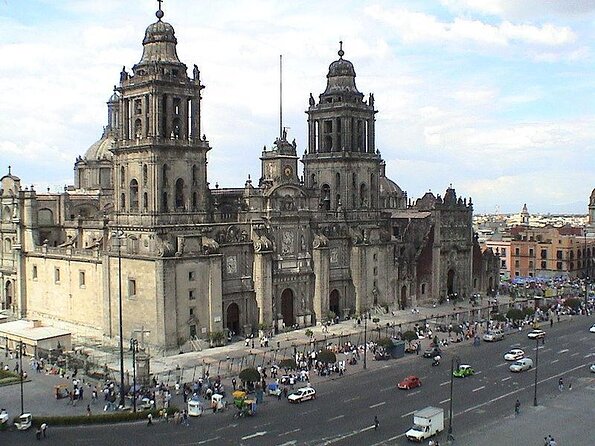
The Metropolitan Cathedral is explained from the outside. The short stop focuses on its construction, origins, and mix of Baroque and neoclassical design.
That outside explanation is useful because the cathedral is not just an attractive church on one side of the Zócalo. It reflects the long process of building colonial power over the former Mexica capital. You can examine the facade while the guide explains how the building developed and why its design contains more than one architectural style.
Admission is not included, and the itinerary does not promise an interior visit. If you want to see inside, ask the guide about timing, but plan to treat that as an optional addition rather than part of the three-hour route.
Templo Mayor and the Mexica center
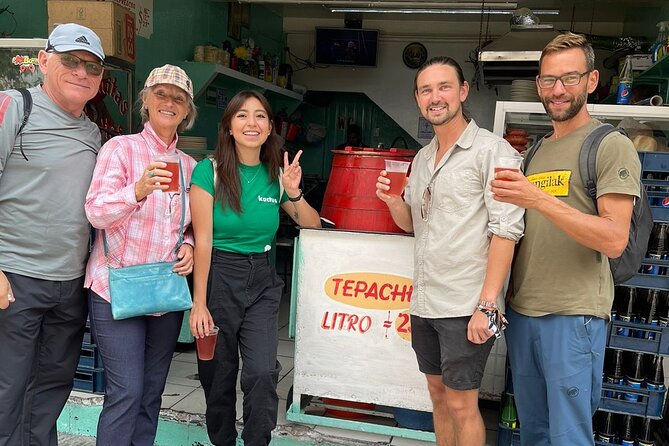
Near the cathedral, the route reaches the archaeological remains of Templo Mayor. The tour views the ruins from outside and explains their importance to the Mexicas, including the temple’s connection to the gods of rain and the sun.
This is one of the places where the walk’s layered approach works best. You can see ancient remains beside the colonial cathedral, with modern city streets carrying on around both. The guide also explains the site’s geographic arrangement and how it fit into the larger Mexica center.
The stop is short, so do not expect a full archaeological museum visit. Still, the explanation gives you a useful framework for returning later if you want more detail. The contrast between exposed ruins and later buildings is easy to understand on foot and much harder to grasp from a map.
Same base, a different sort of day:
- Teotihuacan, Guadalupe Shrine & Tlatelolco Day Tour with Lunch
★ 5.0 · 11,603 reviews - Xochimilco, Coyoacan and Frida Kahlo with Optional Lunch
★ 4.5 · 7,320 reviews - Balloon flight + Breakfast in cave + Pyramids + Pick up CDMX.
★ 5.0 · 6,335 reviews - Teotihuacan pyramids morning or afternoon without tourist traps
★ 5.0 · 6,186 reviews
Diego Rivera inside the Ministry of Education
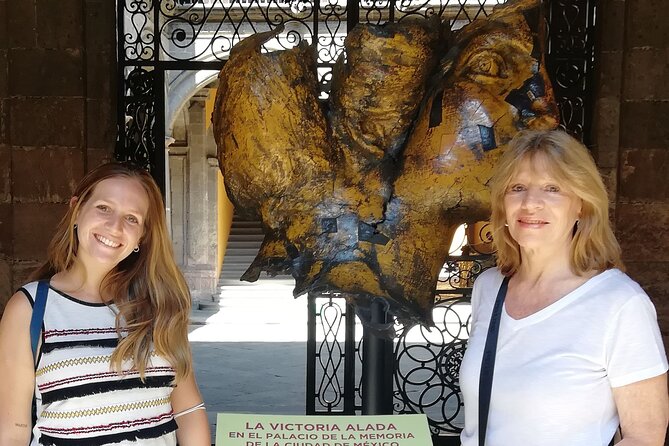
The Museo Vivo del Muralismo, housed in the Ministry of Education, is the route’s main indoor art visit. You spend about 25 minutes inside, viewing a large collection of Diego Rivera murals. The murals cover festivals, trade, traditions, political life, and social struggle in early 20th-century Mexico.
I especially like this part because it adds people and working life to the monumental buildings outside. Rivera’s scenes are not simply decoration. They offer a visual way to discuss class, labor, indigenous identity, politics, and the country’s effort to define itself after revolution.
The visit may also provide a break from the sun and pavement. One practical note: the group may need to adjust its time inside. Fernanda, for example, has been praised for allowing extra minutes in the courtyard when the group wanted to look more closely.
Because the route only allows about 25 minutes here, you will not see every mural at length. If Rivera is a major interest, make a note of the building and consider returning with more time.
Santo Domingo and the business of New Spain
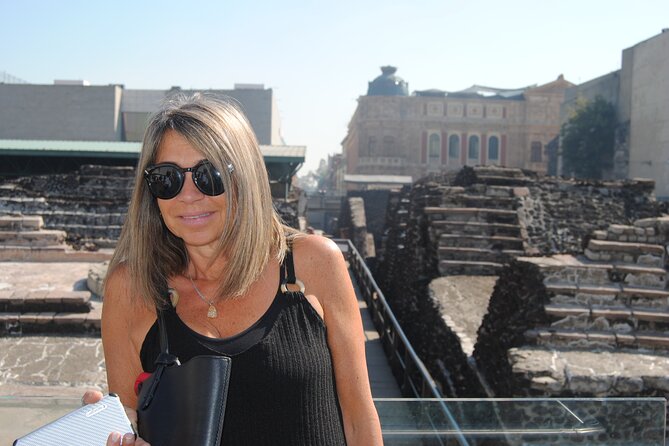
Plaza de Santo Domingo brings the tour into the colonial period. The guide discusses major events of the viceroyalty of New Spain, trade in spices and goods with Asia, the Holy Inquisition, and French attempts to conquer Mexico.
This is a useful reminder that Mexico City was tied to international trade and imperial politics. The city was not an isolated colonial outpost. Goods, people, religious authority, and military ambitions all passed through it.
The square also gives the guide room to explain how public spaces changed over time. Some stops are less about one perfect building than about the events that took place around it. If you prefer stories that connect architecture to power and commerce, this section should hold your attention.
Resting at Plaza Tolsá
Plaza Tolsá is the planned rest point. You pause in the shade while the guide talks about indigenous languages, the Day of the Dead, music, politics, and Mexican food.
This break matters. Three hours of walking in the center can be tiring, and the route includes uneven streets and periods without seats. Guides have been praised for watching the group’s comfort, finding shade, and allowing bathroom breaks when needed.
The square also contains several notable sights. You see the equestrian statue of Charles IV, commonly called El Caballito, or the Little Horse. The tour also points out the exterior of the National Museum of Art and the Mining Palace.
The pause is a good time to ask for recommendations. Luis has been especially appreciated for sharing a useful list of places to consider after the tour. Since food and sweets are not included, this is also a sensible moment to ask what local specialties you might try nearby.
A window into the city’s buried past
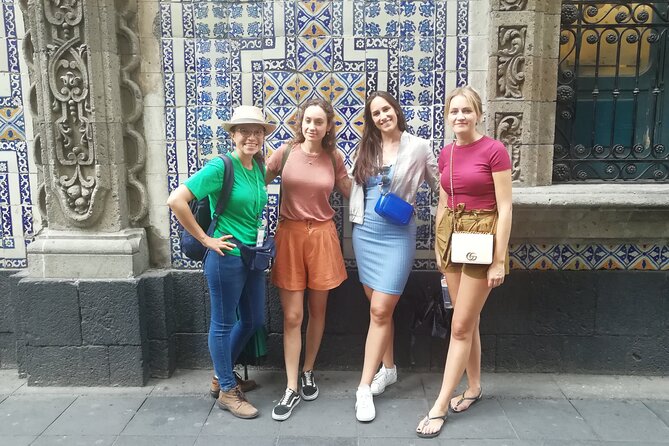
The Ventana Arqueológica is a very short stop, about five minutes, but it gives you a memorable look below street level. The guide explains how archaeological remains were found beneath a street near the main temple and points out the hidden layers beneath many central buildings.
This small window reinforces the central idea of the tour: Mexico City was built over earlier cities, and its past often appears in unexpected places. The stop is included, though its short length means you should think of it as a quick explanation rather than a full archaeological visit.
Palacio de Bellas Artes and the city’s grand public art
The Palace of Fine Arts is one of the route’s essential photo stops. The guide discusses the exterior and interior as works of art, though this itinerary does not include an indoor admission visit.
From the outside, the building offers an immediate change of mood. After the ruins, churches, and government spaces, you reach a palace devoted to performance and art. The guide can help you notice how the building contributes to the visual character of the center instead of treating it as just another famous photograph.
The tour ends nearby at Edificio Guardiola, beside the Palace of Fine Arts and the House of Tiles. That location is useful because you can continue exploring without arranging transport.
Palacio Postal and the House of Tiles
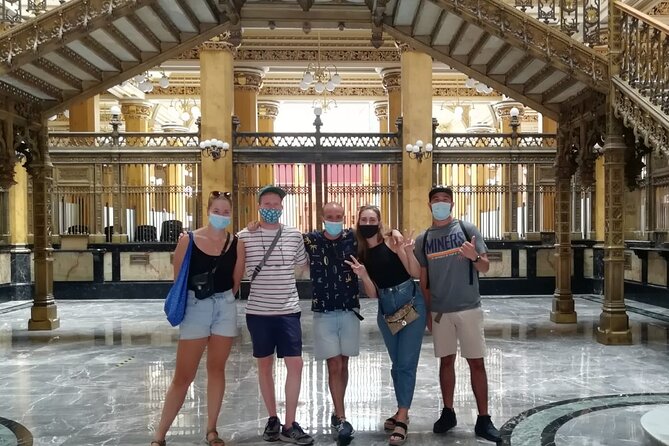
The Palacio Postal is still in operation, which makes the stop more interesting than a look at a preserved facade. The guide explains the building’s economic and political meaning while you admire its ornate design from outside. Admission is not included.
The House of Tiles, or Casa de los Azulejos, is one of the city’s most photographed buildings. Its tiled exterior is an easy visual finish to the tour, and the location makes a natural place to pause for photographs or continue through the central streets.
The route does not promise long interior visits at either building. That is a fair trade for seeing more of the center in one morning or afternoon, but it means you should return later if you want to explore these places in detail.
Pace, comfort, and practical planning
Plan on continuous walking for roughly three hours. The published stop times add up to less than the full tour, since the rest of the time is used moving between sites and hearing explanations along the streets.
The cobblestones and uneven paving are worth taking seriously. One departure lost some planned sights because several people had trouble walking, which slowed the group. Most people can participate, but this is not a gentle sightseeing ride with frequent seating.
Mexico City’s elevation can also affect how quickly you tire, especially if you have just arrived. Wear supportive shoes, bring water, and use sun protection. The guide may look for shade, but you should still prepare for exposed plazas.
The tour is offered in English and is near public transportation. You arrange your own way to Plaza de la Constitución, and the walk ends at Edificio Guardiola. Service animals are allowed.
The experience depends on weather and a minimum number of participants. You can cancel for a full refund up to 24 hours before the start time. A cancellation inside 24 hours is not refunded, while a weather or minimum-group cancellation offers another date or a full refund.
Is the tour worth the price?
A specific fare is not provided here, so I cannot judge the exact cost against other Mexico City walks. The value is easiest to understand by looking at what you receive: three hours with an English-speaking guide, a group limited to 10, access to the Ministry of Education murals, and a carefully connected route through the central district.
You are not paying for transport, food, cathedral admission, Palacio Postal admission, or a full museum program. If you want an in-depth archaeology or art tour, this will feel too broad. If you want a strong first orientation, the combination of ruins, murals, colonial plazas, and current cultural topics gives the fee a reasonable purpose.
The strongest value comes from the guide. Names such as Fernanda, Alexia, Luis, Nat, and Benjamin appear repeatedly in the experience’s recent guide roster, and their approach tends to include questions, local examples, and practical help with shade, street crossings, and pace.
Who should book this walk?
Book it if you are visiting Mexico City for the first time and want the historic center to make sense before exploring it alone. It is also a good fit if you prefer history told through streets, buildings, and public spaces rather than a long lecture inside one museum.
The walk suits adults, couples, friends, solo visitors, and mixed-age groups who can manage several hours on foot. It works especially well at the start of a stay because the final stop leaves you near several major sights and gives you ideas for where to return.
Think twice if you need frequent seating, dislike uneven streets, or want extensive time inside every building. You may also prefer a specialized museum tour if Rivera, Templo Mayor, or colonial architecture is your main interest.
Should you book the Historic Center walking tour?
I would book this as a first-day introduction, especially if you want the city’s pre-Hispanic, colonial, revolutionary, and modern stories tied together in plain English. The small group, central route, indoor Rivera murals, and final location near Bellas Artes make it practical.
Choose another experience if you want a slow, in-depth visit to each museum or if three hours of walking sounds uncomfortable. For most reasonably mobile visitors, though, this is a useful way to get your bearings, learn what deserves a second visit, and begin seeing Mexico City as a layered, living place rather than a list of monuments.
FAQ
How long is the walking tour?
The tour lasts approximately three hours, including time spent walking between the listed stops.
Where does the tour begin?
It begins at Plaza de la Constitución in Mexico City’s Centro Histórico.
Where does the tour end?
The walk ends at Edificio Guardiola on Avenida 5 de Mayo, beside the Palace of Fine Arts and the House of Tiles.
Is the tour offered in English?
Yes. The experience is offered in English.
How large is the group?
The tour has a maximum of 10 participants.
Are entrance fees included?
The tour includes admission to the Ventana Arqueológica and the Ministry of Education mural visit. Cathedral, Palacio Postal, and other admissions not specifically included are not covered.
What happens if I need to cancel?
You receive a full refund if you cancel at least 24 hours before the start time. Cancellations within 24 hours are not refunded. If poor weather or an insufficient minimum group causes the operator to cancel, you are offered another date or a full refund.
Just added in Mexico City
- Cuernavaca and Taxco Tour from Mexico City★ 4.0 · 88 reviews
- Mexico City: Taxco & Cuernavaca Tour with Pre-Hispanic Mine★ 4.6 · 271 reviews
- A Night of Tacos and Mezcal in Mexico City★ 5.0 · 262 reviews
- Mexico City: Tequila and Mezcal Museum Tour with Tasting★ 4.8 · 301 reviews
- From Mexico City: 10-Hour Cuernavaca and Taxco Tour★ 4.0 · 133 reviews
- Mexican Wrestling: Experience Lucha Libre in Mexico City★ 4.0 · 228 reviews
- Tolantongo Caves Hot Springs & Waterfalls Small Group Tour★ 4.5 · 254 reviews
- Street Food Tour with Friends★ 5.0 · 326 reviews
Walking Tours, compared.


![Frida Kahlo VIP [Museum Tickets Included] Walk, Markets & Churros](https://4.mexicantourreviews.com/wp-content/uploads/frida-kahlo-vip-museum-tickets-included-walk-markets-churros-400x267.jpg)
Frida Kahlo VIP [Museum Tickets Included] Walk, Markets & Churros
Read our review →
Puerto Vallarta’s Best Canopy Zipline + Jorullo Bridge walk!
Read our review →
Historical and Cultural Walking Tour of San Miguel de Allende
Read our review →
Tacos and Tequila Walking Tour with Taste of Miguel
Read our review →
Historical and Cultural Walking Tour of San José del Cabo
Read our review →
Browse the lists this tour appears in