
Reviewed · TOURS IN VALLADOLID
Xkopek, Mayan Bees Tour and Honey Tasting in Valladolid
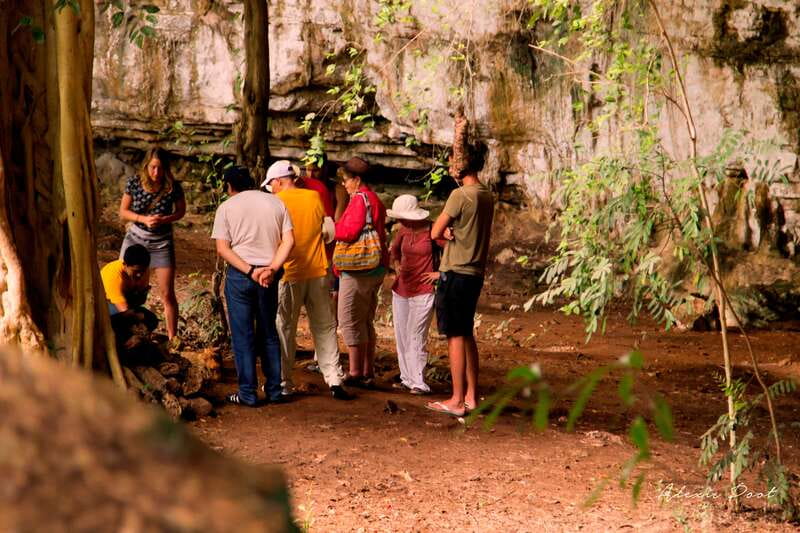
A dry cenote filled with wild, stingless bees is the unusual heart of this Valladolid experience. You walk below ground, see the bees in their natural setting, then learn how local plants help produce honey before opening a hive at Xkopek Parque Apícola.
I like the small groups of up to 10 and the way the tour connects plants, bees, and Maya food traditions. I also like that the tasting is not an afterthought: you sample several honeys and hive products after seeing how they are made. The main drawback is that the route includes stairs and stony paths, so this is not an easy stroll for everyone.
Key points to know
- See stingless bees in a dry cenote: Descend into a natural underground space where local bee varieties live without stingers.
- Watch a hive being opened: Your guide can show you the bees’ unusual hive structure up close.
- Learn which plants support honey production: The jungle path introduces plants and their local uses.
- Taste more than honey: The tasting includes honey, a honey-sweetened drink, and other products from the hive.
- Small, bilingual tour: Groups are limited to 10, with Spanish and English guides available.
- Good value at $18: Admission, guiding, tastings, fresh water, and a gift are included, but transportation and food are not.
Why the dry cenote is the tour’s star

Most cenote visits in the Yucatan focus on swimming. Xkopek offers something different: a walk down into a dry cenote to see local stingless bees living in a natural underground space.
That change of setting gives the first part of the tour real character. Instead of looking at a prepared display, you follow a stairway below ground and enter the cenote vault. The space also introduces you to local plants, with explanations about their uses and importance.
The bees here do not have stingers, so you are not dealing with the same risk as you would around ordinary honeybees. Still, you should follow the guide’s instructions and avoid sudden movements. The point is to observe how the bees live, not to handle them casually.
I find this part especially useful for anyone who has visited other cenotes and wants a different angle on them. You will not be swimming, and the cenote is described as dry, but you do get a closer look at how these underground spaces form part of the local natural world.
The stairs and rocky areas matter. Wear closed shoes with a firm sole, and do not treat this as a flip-flop outing. The walk is manageable for people comfortable with uneven ground, but it may be awkward for very young children or anyone who has trouble with stairs.
A few more things to do in Mexico worth a look
- Cabo Beach Camel Ride, Mexican Buffet and Tequila Tasting
★ 5.0 · 8,815 reviews - Early morning Chichen Itza Tour: Cenote and Tequila Tasting
★ 5.0 · 6,657 reviews - 4×4 ATV Adventure with Tequila Tasting and Mexican Buffet Lunch
★ 5.0 · 5,177 reviews
From jungle plants to the honey house

After the cenote, the group follows a jungle path toward the meliponario, the area where the stingless bees are kept and studied. The walk helps explain something easy to miss when buying honey: bees need a wide range of flowering plants, and the character of honey depends partly on those plants.
Your guide points out the main plants used in local honey production and explains why they matter. This makes the tour more than a simple tasting session. You begin to see the connection between the plants around you and the product waiting at the end.
The path is part of the experience, but it also adds to the walking. The tour lasts about 90 minutes, and much of that time is spent moving between the cenote, the plant area, and the meliponario. I would choose comfortable clothes and shoes rather than anything you would wear for a formal meal afterward.
Only organic repellent is allowed. That is a practical rule, not a minor detail, since conventional insect repellent could affect the bees and the surrounding plants. If you normally use repellent, bring an organic option and check that it meets the park’s rule.
Opening a hive and seeing bee architecture
At the meliponario, you learn how honey is produced and how other hive products are collected. One of the more memorable moments is the chance to open a beehive and observe its internal structure.
Stingless bees build hives differently from the familiar rectangular boxes used for managed honeybees. Seeing the arrangement in person gives the guide something concrete to explain. You can connect the shapes and materials inside the hive with the bees’ daily work, rather than trying to picture it from a talk alone.
The experience is designed for close observation, not a dramatic stunt. You should expect a guide-led demonstration and explanations about the hive, not a chance to handle bees freely. That is a good approach for a short nature tour, especially in a small group where you can see and ask questions.
English and Spanish guiding is available. One guide named Eduardo received special praise for giving clear, interesting explanations and answering questions. Since guide assignments can vary, you may not have Eduardo, but the tour is set up for live bilingual instruction rather than a self-guided visit.
The small group size helps here. With a maximum of 10 people, you have a better chance of seeing inside the hive and hearing the explanation than you would in a large coach group. If you are curious about bees, ask questions as you go. The format leaves room for them.
The honey tasting is more useful than a quick sample

The tasting comes after the walk and the hive demonstration, which is exactly where it belongs. By then, you have seen the bees and learned about the plants, so the flavors have some context.
You taste different types of honey along with other products from the hive. The exact selection can vary, but the tasting is intended to show that honey is not one single flavor. The guide also explains the traditional health properties associated with hive products.
Keep the health claims in perspective. The tour can explain local beliefs and uses, but a tasting is not medical advice. Enjoy the products for their taste and cultural importance rather than treating them as a substitute for medicine.
You also receive a honey-sweetened drink. Fresh water is included, which is useful in Yucatan’s warm conditions, especially after walking the trails and cenote stairs.
The tasting makes the $18 price easier to judge. You are not paying only for entry to a small nature park. The fee covers admission, a bilingual guide, honey and hive-product samples, fresh water, and a gift. Food is not included, so plan to eat separately if you need a full meal.
There is also a small shop selling honey and souvenirs. That gives you a chance to buy something connected to the visit, but you are not required to purchase anything. A souvenir photo is part of the closing stop, giving the tour a simple final memory of the experience.
Same base, a different sort of day:
- Chichen Itza, Cenote, and Valladolid Tour
★ 5.0 · 24,293 reviews - Chichen Itza, Cenote & Valladolid Tour with Tequila and Lunch
★ 4.5 · 15,789 reviews - Teotihuacan, Guadalupe Shrine & Tlatelolco Day Tour with Lunch
★ 5.0 · 11,603 reviews - Xochimilco, Coyoacan and Frida Kahlo with Optional Lunch
★ 4.5 · 7,320 reviews
What the 90-minute schedule feels like

Ninety minutes is a good length for this activity. It is long enough to include the cenote, plant walk, meliponario, hive demonstration, tasting, and shop without taking over your day in Valladolid.
The tour is active, but not strenuous in the sense of a long hike. The main physical concerns are stairs, stony sections, and walking outdoors. You should wear comfortable clothing and closed shoes, and you should be ready for a route that is less polished than a paved museum visit.
The pace also depends on questions and group size. A group of 10 can move efficiently, but a good guide may pause when people want more information. That is helpful if you are interested in plants or bee keeping, though less appealing if you want a fast stop between major attractions.
The tour does not include transportation. Xkopek Parque Apícola is at Calle 57 x 38, Colonia San Juan, next to the Sindicato de Taxistas Los Frailes, near Villas del Sol. You can take a taxi or drive using Google Maps.
The meeting point is in Valladolid, but you should still allow time to reach it. Do not assume that the activity begins from your hotel or from the town’s main plaza. Confirm your route before the start time, especially if you are arranging the tour around another booking.
Who will get the most from Xkopek

I would recommend this tour to anyone who wants a short, local experience with a clear connection to Yucatan nature and food. It works especially well for:
- People curious about stingless Maya bees
- Visitors who have already seen a swimming cenote
- Families with children old enough to manage stairs and uneven paths
- Anyone who enjoys tastings with a cultural explanation
- Couples or small groups looking for a quieter activity in Valladolid
- Visitors with only half a day available
Children under 5 are not permitted. Older children may enjoy the novelty of seeing a hive opened, but the trail conditions and the need to listen near the bees mean this is not a free-running children’s attraction.
I would also recommend it to people who like asking questions. The most useful parts are the explanations about plants, bee behavior, hive structure, and local products. If you only want to buy honey, you can visit the shop without booking the full activity. The tour earns its price through the setting and the guided access.
It may not suit you if you need a fully accessible route, dislike uneven ground, or are looking for a swimming cenote. The tour description specifically notes stairs and stony areas, and the cenote is dry. Those are central facts, not small exceptions.
How the price compares with the experience

At $18 per person, this is a modestly priced activity for a 90-minute guided visit. You receive the entry ticket, bilingual instruction, tastings, water, and a gift. That makes the cost easier to justify than a simple admission ticket with no explanation.
The value comes from the combination. A honey tasting alone might be brief, while a nature walk alone might leave you wondering what you were looking at. Here, the cenote, plants, hive, and tasting form one connected lesson.
You still need to budget for transportation to the park and any food afterward. There is a small cafe nearby, but food is not part of the tour. A taxi or private car is your responsibility as well.
The booking terms are flexible: you can reserve now and pay later, and cancellation is allowed up to 24 hours in advance for a full refund. That is useful if your Valladolid plans may shift. Check the available start times before booking, since the 90-minute duration alone does not tell you when tours run.
Small details that make the visit easier

Bring comfortable closed shoes. The cenote stairs and stone sections are the clearest reason, but sturdy footwear also makes the jungle path more pleasant.
Use only organic repellent. If you are sensitive to insects, plan ahead rather than arriving with a standard spray that the park will not allow.
Carry a little patience for the tasting and hive demonstration. With a small group, the guide may answer questions in both languages, which can take more time than a one-language tour. That is part of the value, especially if you want to understand rather than simply take photos.
Do not expect a large attraction with many rides or exhibits. Xkopek is appealing because it is focused. You spend the time on bees, plants, the dry cenote, and honey products, then finish at a small shop.
The experience has earned a 4.8 rating from 66 bookings, with repeated praise for the natural setting, clear explanations, close views of the bees, and the final tasting. The strongest pattern is simple: people who want an informative, unusual nature stop tend to find the visit worth the time and money.
Should you book the Xkopek bee tour?
Book it if you want to understand a distinctive part of Yucatan life rather than simply pass through Valladolid’s sights. The stingless bees, dry cenote, plant walk, hive demonstration, and tasting make this more memorable than a standard honey shop visit.
I would especially choose it after visiting a swimming cenote, since it gives you a different use of the same underground world. The $18 price is fair for the guide, samples, water, admission, and gift, provided you are comfortable paying separately for transportation and food.
Skip it if you need a smooth, step-free route, want to swim, or have no interest in bees and honey. For everyone else, this is a compact and practical Valladolid experience with enough local detail to stay with you after the last spoonful.
FAQ

Where does the Xkopek Mayan Bees Tour meet?
The meeting point is Xkopek Parque Apícola at Calle 57 x 38, Colonia San Juan, next to the Sindicato de Taxistas Los Frailes, near Villas del Sol in Valladolid.
How long does the tour last?
The activity lasts about 90 minutes.
How much does the tour cost?
The listed price is $18 per person.
What languages are available?
The tour is available with a live guide in Spanish or English.
How large is the group?
The group is limited to 10 participants.
Will I see bees in a natural setting?
Yes. The tour takes you into a dry cenote where local stingless bee varieties can be seen in their wild state.
Are the bees dangerous?
The bees in the dry cenote do not have stingers. You should still follow the guide’s instructions while observing them.
What should I wear?
Wear comfortable clothes and closed shoes suitable for walking. The route includes stairs and stony areas.
Are children under 5 allowed?
No. The tour is not suitable for children under 5 years old.
Just added in Mexico
- Mazatlan Sightseeing and Golden Zone★ 4.5 · 119 reviews
- Private Van and Bilingual Local Driver★ 5.0 · 88 reviews
- Barrio Bites tour★ 5.0 · 146 reviews
- Jungle and Beach Horseback ride Tour in Pacific Coast★ 4.5 · 39 reviews
- Private VAN Round-Trip from Airport to Cabo San Lucas Pacific★ 5.0 · 49 reviews
- Private VAN Round-Trip from Airport to Hotel in San José del Cabo★ 4.5 · 40 reviews
- Whale Watching Tour in Los Cabos★ 4.5 · 73 reviews
- SJD Airport to San José Round trip★ 5.0 · 71 reviews
Tours in Valladolid, compared.

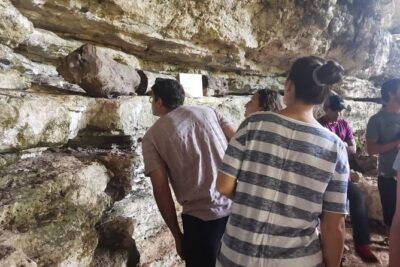
Valladolid Mayan Bees Tour with Lunch or breakfast and Honey Tasting
Read our review →
Rio Lagartos guided boat tour- Ek Balam from Valladolid
Read our review →
Full Day Tour Chichen Itza plus Cenotes From Valladolid
Read our review →

FROM VALLADOLID RIO LAGARTOS + LAS COLORADAS + CENOTE (COLECTIVO TOURISTIC)
Read our review →Browse the lists this tour appears in