
Reviewed · MUSEUMS
Mexico City: Anthropology Museum Tour with Historian
Mexico City’s National Museum of Anthropology is so large that its finest objects can blur into a long parade of stone, clay, jade, and painted walls. This tour gives the collection a clear thread, linking the Olmec colossal head, Mexica Sun Stone, Teotihuacán art, and Maya writing instead of treating each room as a separate stop.
I like two things right away: the guides bring serious academic training without turning the visit into a lecture, and they explain how ordinary materials such as agave fibers and natural dyes shaped daily life. The main drawback is time. Three hours is enough for a smart route through the highlights, but not enough to see every gallery at a relaxed pace.
Key points
- A historian-led route: Guides such as Natalia and Hector hold graduate degrees in history or art history and explain objects in clear, engaging English or Spanish.
- A connected Mesoamerican story: Olmec ideas, Teotihuacán’s many cultures, Mexica city planning, and Maya writing are presented as part of a wider regional story.
- Major objects with useful context: See the Sun Stone, an Olmec colossal head, Teotihuacán ceramics and murals, Maya jade, and a replica of Pakal’s tomb.
- Small groups of up to 10: The format leaves room for questions, though group size and museum crowds can affect how easily you move between displays.
- A practical three-hour introduction: The tour covers the museum’s key rooms without asking you to spend a full day there, and you may remain afterward to see more on your own.
- Easy booking terms: Museum admission, headsets for larger groups, and free cancellation up to 24 hours ahead are included.
Why the Anthropology Museum Needs a Guide
The museum is not simply a collection of old objects. It is a carefully planned argument about the many peoples who shaped Mesoamerica, a cultural region that reached across much of present-day Mexico and Central America.
Without context, the galleries can feel like separate worlds. You may admire a carved face in one room, a woven garment in another, and a jade ornament later without seeing the links between them. This tour keeps asking useful questions: Which ideas traveled? Which materials mattered? How did symbols change from one culture to another?
That approach is the tour’s main strength. Natalia is known for using slides and images on an iPad to show missing context, reconstructed buildings, or details that are hard to see in a case. Hector brings the experience of a former college professor and has a strong speaking voice that helps in busy rooms.
The guides are not presented as entertainers first. Their training in art history or history gives the tour a firm base, but the strongest part is their ability to explain difficult subjects in plain language. You can ask questions as you go, which is especially useful if terms such as Mesoamerica, cosmology, chinampa, or glyph are new to you.
A few more things to do in Mexico City worth a look
- CDMX: Xochimilco, Coyoacan, Frida Kahlo Museum & Murals Tour
★ 4.4 · 3,025 reviews - Chapultepec Castle & Anthropology Museum Tour
★ 4.5 · 1,348 reviews - Frida Kahlo VIP [Museum Tickets Included] Bike, Markets & Churros
★ 5.0 · 1,072 reviews
Starting With Architecture and the Courtyard Fountain
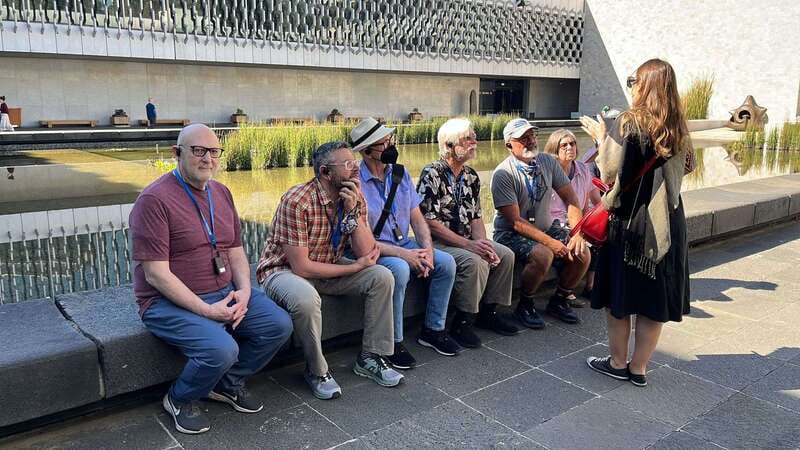
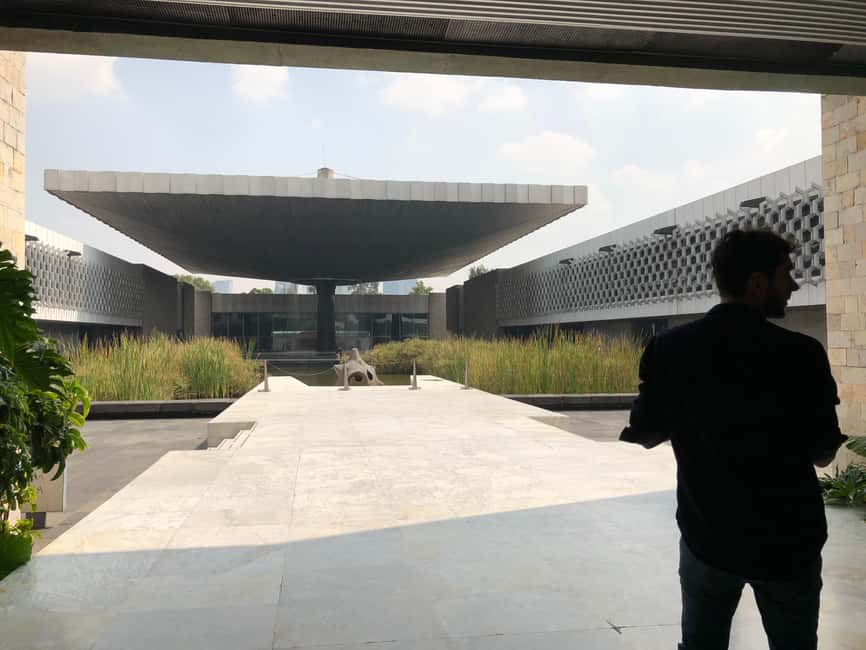
The visit begins with the museum itself. That is a good choice, since the building was designed to frame the cultures inside rather than act as a neutral box.
Your guide explains how architects and artists worked together on murals, symbols, monumental replicas, and large open spaces. This introduction helps you notice that the museum’s architecture is part of the exhibit. You are not only looking at objects from Mesoamerica. You are also moving through a modern interpretation of those cultures.
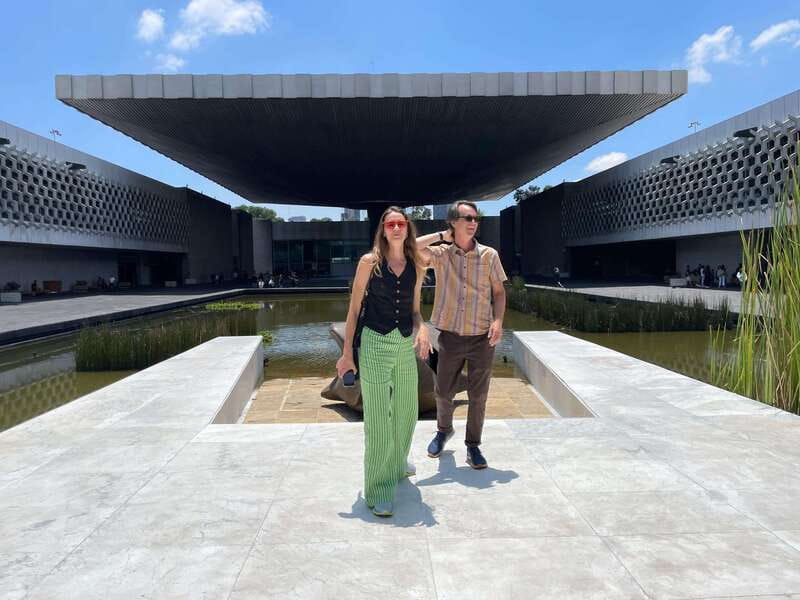
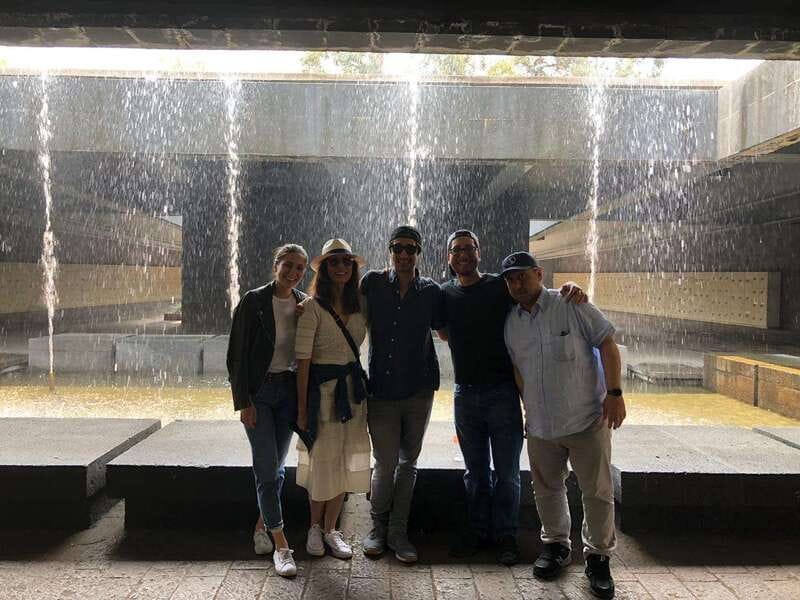
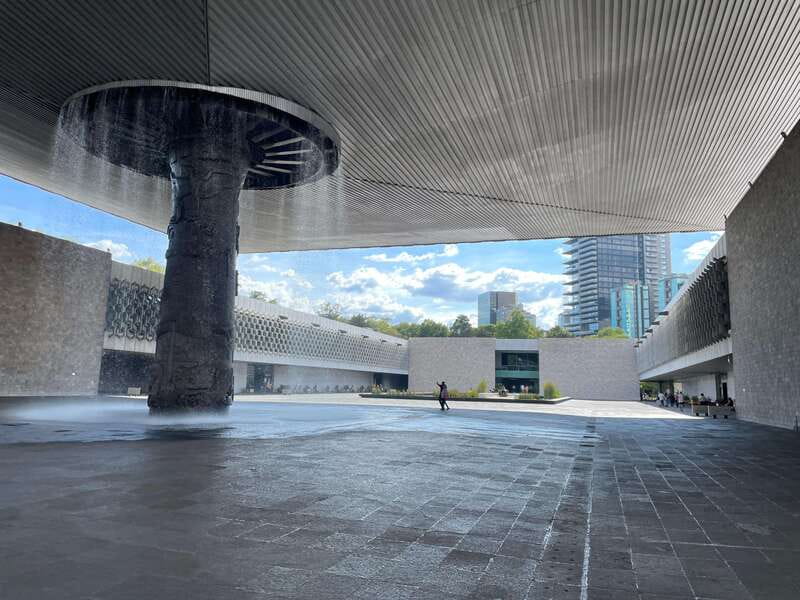
The famous courtyard fountain comes next. Its broad canopy of water is one of the museum’s most memorable sights, and the tour gives it meaning instead of treating it as a quick photo stop.
This is an easy place to pause and get oriented. It also sets the tone for the rest of the visit: pay attention to scale, repeated symbols, materials, and the way an object or building guides your eye.
Defining Mesoamerica Without Flattening It
The Mesoamerica section introduces the term itself. Paul Kirchhoff used it to describe a broad cultural region whose peoples shared certain traditions, languages, farming systems, and religious ideas.
That does not mean all Mesoamerican societies were the same. The point is more subtle. Communities separated by long distances could share maize-based agriculture, calendar traditions, ceremonial practices, trade goods, and visual symbols while keeping their own languages and political identities.
I find this opening especially useful because it prevents a common mistake: treating Maya, Mexica, Olmec, and Teotihuacán cultures as one single civilization. The tour shows connections without erasing differences.
For first-time visitors, this section supplies the map for everything that follows. Instead of memorizing isolated dates, you begin to see how people exchanged ideas, moved materials, and adapted older traditions for new purposes.
Agave, Looms, and the Work Behind the Art
The textile displays bring the subject down to earth. You see looms, garments, and woven materials from different parts of Mesoamerica, then learn how people spun fibers, built cloth, and used color.
Agave is a star here. It supplied fibers for textiles, but its uses reached into tools and household objects as well. That practical range is easy to miss when a museum visit focuses only on monumental stonework.
Natural pigments add another layer. Your guide discusses organic materials used for dyeing and shows how color was part of clothing, ritual, and identity. This gives you a better sense of the labor behind an impressive garment or ceremonial object.
I like this part because it balances the famous objects. Not every important story is carved in stone. Textiles, tools, and dyeing methods tell you how people organized daily life, marked social roles, and used the plants around them.
The displays can be visually dense, and you will not examine every piece in detail during a three-hour route. The benefit of having a guide is that you get a sensible selection rather than stopping at every case and losing your place.
Same base, a different sort of day:
- Teotihuacan, Guadalupe Shrine & Tlatelolco Day Tour with Lunch
★ 5.0 · 11,603 reviews - Xochimilco, Coyoacan and Frida Kahlo with Optional Lunch
★ 4.5 · 7,320 reviews - Balloon flight + Breakfast in cave + Pyramids + Pick up CDMX.
★ 5.0 · 6,335 reviews - Teotihuacan pyramids morning or afternoon without tourist traps
★ 5.0 · 6,186 reviews
Cultural Exchange in Clothing and Ceremony
The next displays focus on ritual clothing, body decoration, and ceremonial objects. The point is not simply that the pieces are colorful. It is that clothing and ornament carried meaning.
Across Mesoamerica, dress could signal rank, religious role, age, community, or participation in a festival. Objects moved between regions, and artistic ideas were borrowed, reshaped, and given new local meaning.
Your guide uses these displays to explain cultural blending over time. That word should not suggest a smooth or peaceful process in every case. It is better understood as a long exchange of ideas, goods, religious images, and techniques among communities with different histories.
This portion works well for families and for anyone who prefers human stories to long lists of rulers. You can ask why a particular headdress mattered, how pigments were made, or what a ceremonial object might communicate to its audience.
The Olmec Colossal Head and the Question of Influence
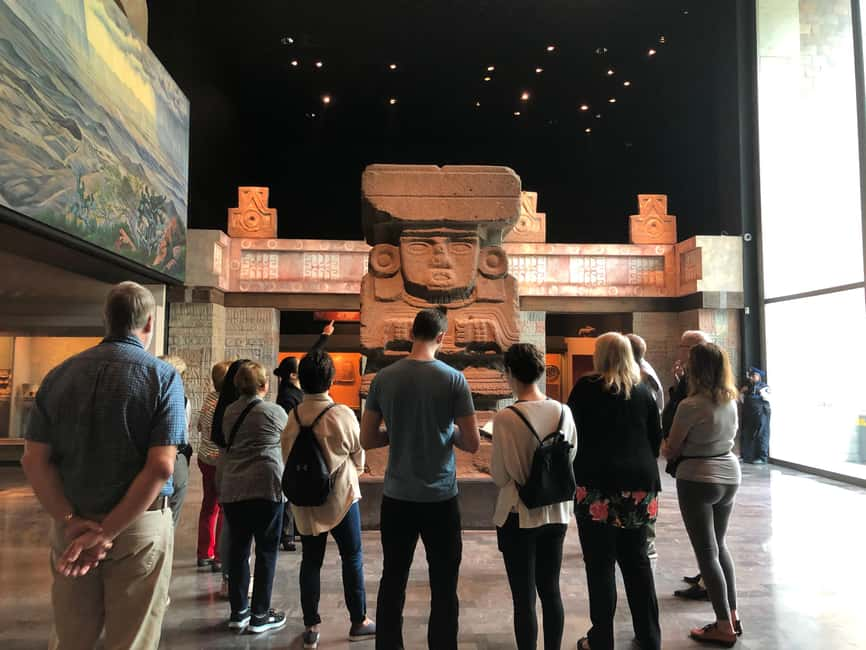
The Olmec gallery offers one of the tour’s major visual moments: a colossal head. Its size and force make it easy to understand why the object has become an emblem of early Mesoamerican art.
The guide places it within the wider question of Olmec influence. The Olmec are often called a mother culture because later societies appear to share artistic forms, religious concepts, and other ideas associated with them.
That label needs care. It can make history sound like a simple family tree, with one civilization creating everything that came later. The tour is more useful when it treats influence as a subject of study and debate, not a neat answer to every question.
The head itself is also a reminder of technical skill. Moving and shaping such a massive stone required organization, labor, and a shared purpose. You are looking at portraiture, engineering, and political power at the same time.
Mexica Mexico City Beneath the Colonial City
The Mexica gallery brings the story into the area where modern Mexico City now sits. The scale model of Tenochtitlan helps you picture an urban center built on a lake, with causeways, bridges, aqueducts, and chinampas.
Chinampas are often called artificial islands, though that short phrase does not capture the full system. They were productive plots supported by water and connected to the city through a sophisticated network of canals and access routes.
The model is valuable because the old Mexica city is largely hidden beneath the modern capital and colonial buildings. You can see how the urban plan worked even when the original streets are no longer visible.
Then comes the Sun Stone, commonly called the Aztec Calendar. Your guide explains that this popular name is misleading. The object is better understood through its imagery and ritual meaning than as a simple calendar hanging on a wall.
This is one of the stops where a guide adds real value. A casual visit can leave you with a famous photograph and a vague idea about an ancient calendar. A careful explanation helps you read the carved symbols, understand the layers of meaning, and place the object within Mexica religious thought.
The Mexica room can be crowded, and the Sun Stone naturally draws attention. Headsets are provided for larger groups, but you may still need to shift position or wait for a clear view. The tradeoff is worthwhile because this is one of the collection’s essential rooms.
Teotihuacán as a Multicultural City
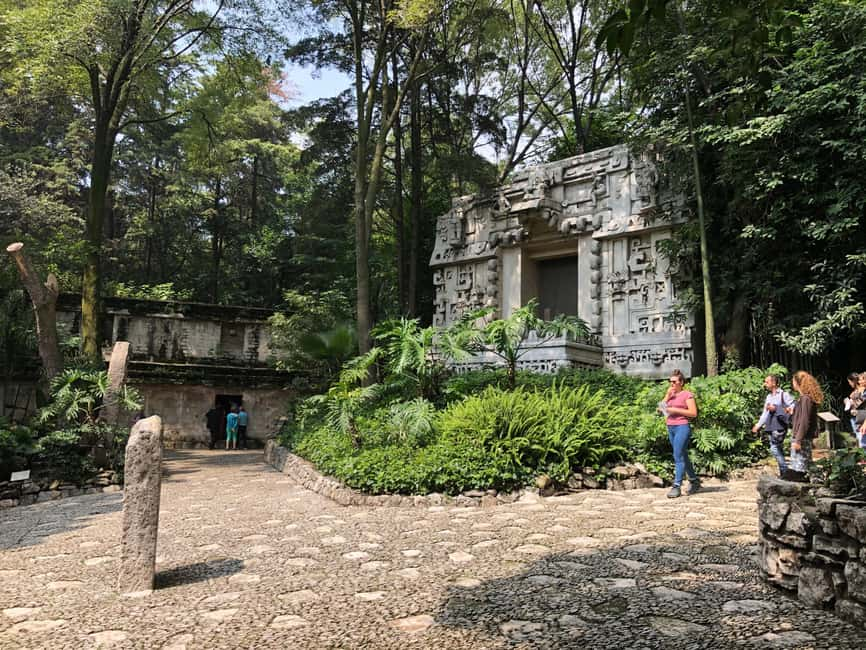
Teotihuacán is often presented as a mysterious ancient city of pyramids. This tour gives you a broader view. The evidence points to a large, cosmopolitan center shaped by many peoples rather than a city that belonged to one clearly identified ethnic group.
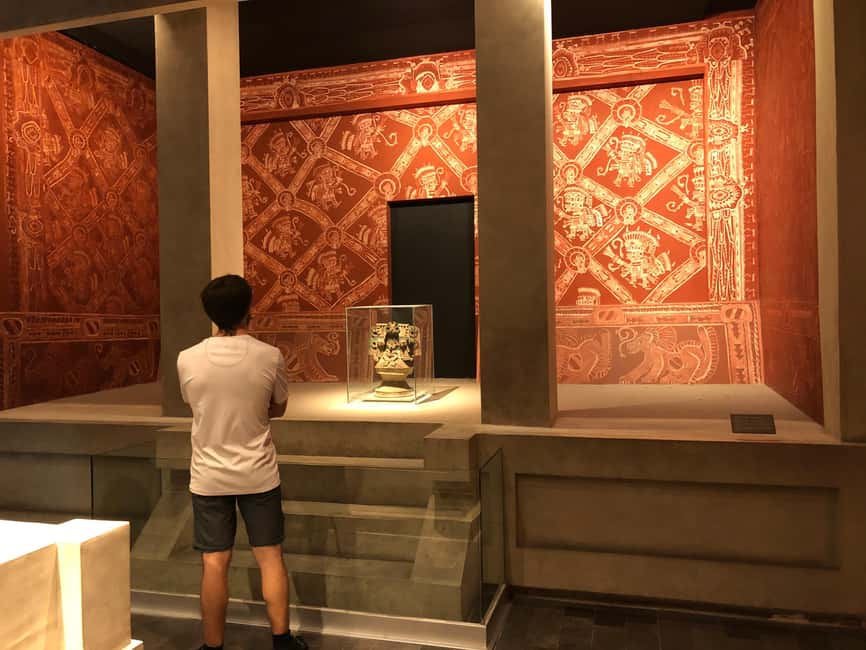
The gallery includes ceramics, obsidian objects, mural fragments, and colorful architectural replicas. These pieces show both refinement and reach. Obsidian was prized for tools and weapons, while murals and decorated buildings gave public spaces a strong visual identity.
Your guide discusses theories about Teotihuacán’s rise and decline. The fact that some questions remain open is part of the appeal, but the tour avoids making mystery the whole story. You also consider urban growth, cultural contact, trade, and political power.
For me, this section is a useful correction to the idea that ancient cities were isolated. Teotihuacán connected different communities and carried influence far beyond its central valley. Its art also helps you compare what changes and what remains familiar across Mesoamerican cultures.
Maya Writing, Portraits, and Pakal’s Tomb
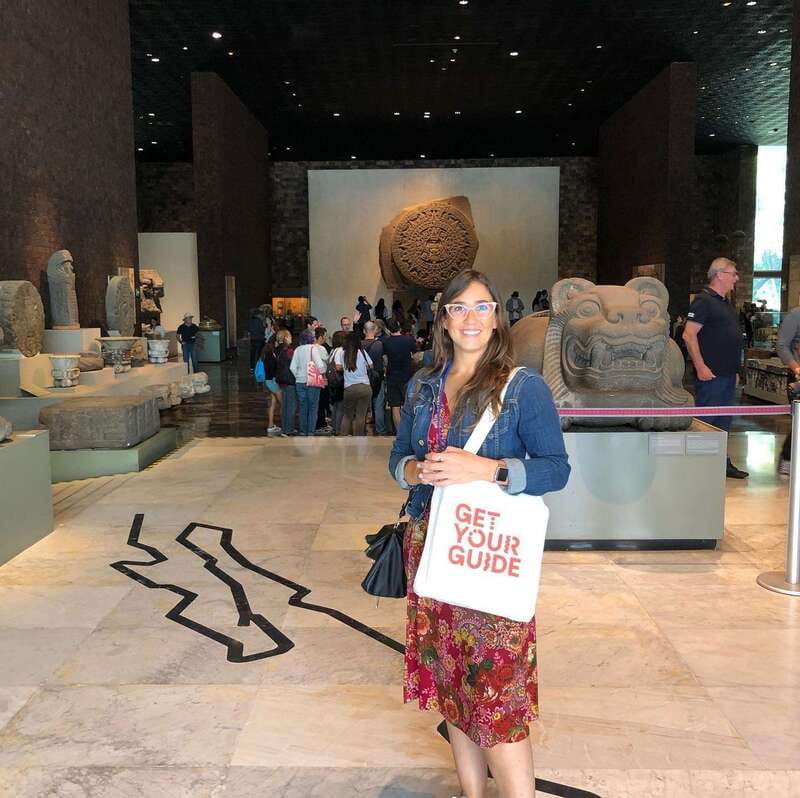
The Maya gallery is the final major section, and it shifts the focus toward writing, portraiture, and elite art. Ceramic portraits, painted vessels, and jade carvings show a culture with a highly developed visual language.
The story of Maya writing is one of the most memorable parts of the tour. Its decipherment involved colonial records, lost manuscripts, and the work of a Russian soldier who had served during the Second World War. That combination of old documents, modern scholarship, and an unexpected individual makes the subject easy to remember.
Your guide explains how scholars moved from seeing Maya signs as mysterious pictures to recognizing their role in recording language and history. You do not need prior training in ancient scripts to follow the basic breakthrough.
The tour ends at the replica of Pakal’s tomb, one of the museum’s most dramatic spaces. The reconstruction gives you a sense of the burial setting and the importance of the Maya ruler without requiring a trip to Palenque.
It also carries a darker museum story. On Christmas Eve in 1985, thieves stole Pakal’s mask and other treasures from the museum. That episode adds a sharp reminder that these objects are not just beautiful decorations. They have enormous cultural and historical value, and protecting them is a serious challenge.
What Three Hours Really Gets You
The advertised duration is three hours, and that is a sensible expectation for a focused introduction. You will see the museum’s architecture and courtyard, then move through selected areas covering several major Mesoamerican cultures.
Three hours will not allow a slow study of every label or every gallery. If you want to inspect minor objects, read all the wall text, or spend time in additional rooms, plan to continue on your own.
Some guided visits can run longer than planned when questions and crowds slow the route. One useful approach is to avoid scheduling an important appointment immediately afterward. The museum is large, and a guide may spend extra time when the group has strong interest in a subject.
The ticket is included, and you may be able to stay after the guided portion to see more independently. If you do, ask your guide which galleries are best for your remaining time.
Is $175 a Fair Price?
At $175 per person, this is not a cheap museum walk. You are paying for a small group, a graduate-level art historian or historian, museum admission, and a structured route through one of Mexico City’s largest cultural institutions.
The value depends on how you use the guide. If you enjoy reading labels, already know Mesoamerican history, and prefer moving at your own pace, a self-guided visit will cost less and give you more time. You will need to organize the story for yourself, though.
For a first visit, the price is easier to justify. The museum’s size can be overwhelming, and the guide turns a large collection into a sequence you can remember. The ability to ask questions is also important. Natalia and Hector are repeatedly praised for clear explanations, strong English, warmth, and patience with difficult questions.
A private-feeling experience is possible when the group is small. The maximum is 10 participants, and some departures may be much smaller. You should not count on a private tour, but the format is more personal than a large coach excursion.
Practical Details Before You Book
Meet your guide in the museum’s main lobby near the ticket booth. Look for the Walk Mexico project logo, since there is no hotel pickup or transportation included.
The tour runs in English or Spanish and is wheelchair accessible. Headsets are supplied for large groups, although the group limit is 10 people. Children must be accompanied by an adult.
Food and drinks are not included, so plan around the three-hour visit. You can reserve now and pay later, and cancellation is free up to 24 hours before the tour.
I would book an early time if your schedule allows. The museum is large enough that an afternoon visit can easily turn into a full day once you continue on your own. Starting with a guide also gives you a better framework for the rest of the building.
Who Should Book This Museum Tour?
Book it if you want the major objects explained rather than simply photographed. It is especially useful for first-time visitors, families with older children, history fans, and anyone who wants to connect Olmec, Mexica, Teotihuacán, and Maya cultures in one visit.
It is also a good match if you like asking questions. Natalia’s visual aids and Hector’s teaching background suggest that the guide can adjust when a group wants more explanation instead of rushing from case to case.
Skip it if your main goal is a long, quiet museum session. Three hours moves at a purposeful pace, and $175 is a premium for guidance when you could enter and wander independently.
For most visitors, I would book this tour near the start of a Mexico City stay. It gives you a working knowledge of the symbols, materials, and cultures you will encounter elsewhere, from archaeological sites to modern Mexican art.
Should You Book It?
Yes, if the Anthropology Museum feels important to your Mexico City plans and you want help making sense of its size. The strongest reasons are the academic training of guides such as Natalia and Hector, the small group format, and the way the tour links daily materials, city planning, religion, writing, and monumental art.
Just keep your expectations clear. This is a focused highlights tour, not a full museum study day. At $175, it makes the most sense for visitors who value explanation, questions, and a connected story more than the lowest possible admission cost.
FAQ
How long is the Anthropology Museum tour?
The tour lasts three hours. Some visits may take longer if questions, crowds, or the group’s pace extend the route.
What languages are available?
The live guide is available in English or Spanish.
Who leads the tour?
The tour is led by an expert guide with a graduate academic degree in art history or history. Natalia and Hector are among the guides associated with this experience.
What does the price include?
The $175 per-person price includes the museum ticket, the expert guide, and headsets for larger groups.
Is transportation included?
No. You meet your guide at the Anthropology Museum’s main lobby near the ticket booth. Transportation, pickup, drop-off, food, and drinks are not included.
Can I cancel the booking?
Yes. You can cancel up to 24 hours in advance for a full refund, and you can reserve now and pay later.
Just added in Mexico City
- Teotihuacan from Mexico City with early access★ 4.7 · 49 reviews
- Teotihuacan Pyramids: Guided Tour with Entry Ticket Included★ 4.1 · 45 reviews
- Teotihuacan Pyramids: Skip-the-Line Ticket★ 3.8 · 98 reviews
- From Mexico City: Puebla and Cholula Day Tour★ 4.2 · 194 reviews
- Nevado De Toluca: Reach the Summit with Professionals★ 4.8 · 250 reviews
- Mexico City: Xochimilco Boat with Guacamole & Premium Drinks★ 4.8 · 32 reviews
- Mexico City: Vegan and Vegetarian Street Food Adventure★ 4.8 · 65 reviews
- Mexico City: Ticket de entrada Museo Memoria y Tolerancia★ 4.8 · 68 reviews
Museums, compared.
Xochimilco, Coyoacan, Frida Kahlo Museum & Murals Tour
Read our review →
Chapultepec Castle & Anthropology Museum Tour
Read our review →
Frida Kahlo VIP [Museum Tickets Included] Bike, Markets & Churros
Read our review →
EXCLUSIVE TOUR Frida Kahlo Museum – SMALL GROUPS
Read our review →
Coba Multun-Ha Cenote Tulum and Mayan Museum Small Group
Read our review →
Frida Kahlo Museum Entry Ticket w/Digital Guide
Read our review →Browse the lists this tour appears in