
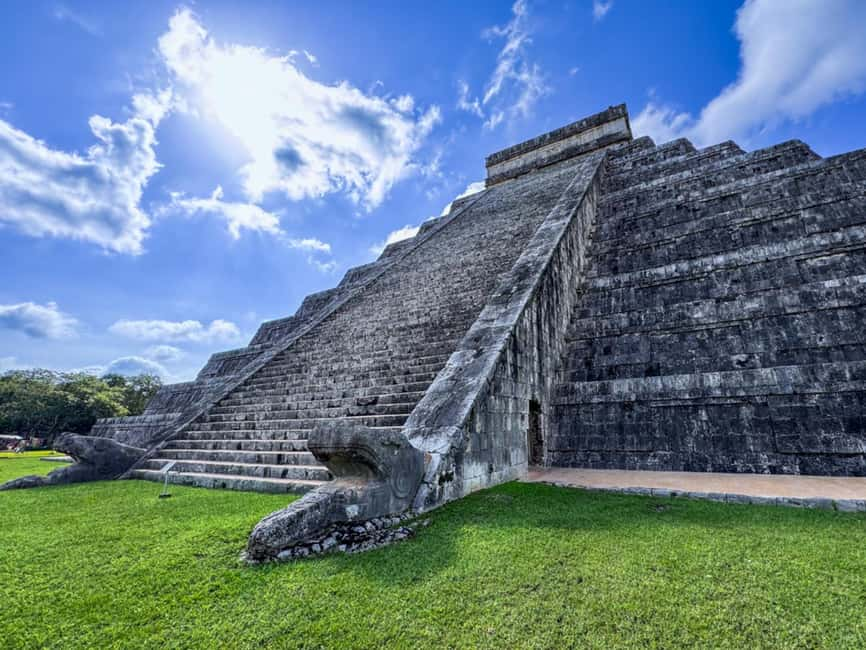
Reviewed · CHICHÉN ITZÁ TOURS
Chichen Itza On-Site Guided Tour with Certified Local Expert
Chichén Itzá is far more than a pyramid in the sun. A good guide helps you read the site: the way buildings use light and sound, how the ball game worked, and why Maya astronomy shaped the architecture. This 90-minute walk gives you that context without tying you to a large bus excursion.
I especially like the choice between a shared bilingual tour and a private monolingual one, plus the practical photo help from guides such as Omar, Santos, Pedro, and René. The main consideration is the heat and the short time: 90 minutes is enough for the major sights, but not for a slow, exhaustive look at every corner.
Key points to know before you book
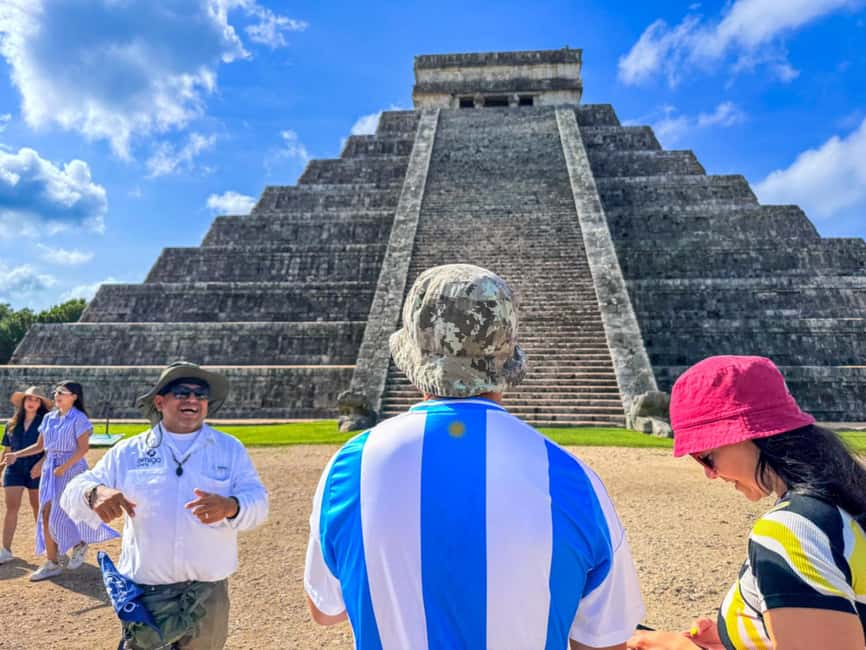
- Meet at the archaeological site: You arrange your own transportation to Chichén Itzá and meet the official local guide at the Parador Turístico.
- Choose your language and group style: Shared tours run in English and Spanish at the same time; private options are available in English, Spanish, Italian, and Portuguese.
- See the essential monuments: The route includes El Castillo, the Temple of Kukulcan, the Great Ball Court, the Sacred Cenote, and other major areas.
- Expect useful visual explanations: Guides may use an iPad to show reconstructions of how parts of the ancient city looked.
- Bring serious sun protection: Comfortable shoes, water, a hat, sunglasses, and sunscreen matter here.
- Check the ticket option carefully: Entrance to Chichén Itzá is included only when you select the option that includes admission.
Why a guide changes Chichén Itzá

Chichén Itzá can look impressive even when you know nothing about it. El Castillo rises above the open grounds, the ball court feels huge, and the stonework makes an immediate visual impact. But without explanation, you may miss the ideas that connect the buildings.
That is where this experience earns its keep. A certified local guide puts the architecture into a cultural frame, explaining Maya rituals, astronomy, daily life, and the role of sound and sunlight. You are not simply walking past old structures. You are learning why they were built in particular ways and how the city worked as a ceremonial center.
I like that the tour focuses on the main monuments rather than trying to cover every path. You have 90 minutes, so the guide has to keep the pace moving. That suits families, first-time visitors, and anyone arriving independently who wants clear context without committing to a full-day package.
The tradeoff is simple: this is a focused introduction, not an archaeological research seminar. You will see the headline sights and have time for questions, but you may want extra time afterward to wander on your own if the grounds and opening conditions allow it.
Other ways to see Chichen Itza from Mérida:
- Chichen Itza, Private Cenote/Food Experience & the magic Izamal
★ 5.0 · 385 reviews - Chichen Itza, Cenote Swim & Izamal Magic Town with Buffet Lunch
★ 4.5 · 317 reviews - From Merida: Chichen Itza Tour, Izamal, Cenote Ik Kil and Food
★ 5.0 · 246 reviews
Meeting your guide at the Parador Turístico
The meeting point is Chichén Itzá’s Parador Turístico, identified as the meeting place for the official Mayan guide. Arrive at least 10 minutes before your booked time. That small buffer matters because the site is not the place to be sorting out directions at the last second.
This is an on-site experience. Transportation is not included, so you need to get to Chichén Itzá independently. That makes the tour useful if you are driving, staying nearby, or already arranging your own day trip from another part of the Yucatán Peninsula.
Read the booking details carefully before paying. The $52 price is listed per person, but the entrance ticket is included only with selected options. If your chosen package does not include admission, you will need to handle the site ticket separately. This is the main pricing detail to check, since a low-looking tour price can mean something different depending on the ticket selection.
The arrival process itself should be straightforward if you follow the meeting instructions. The experience provider is Amigo Tours LATAM, and the guide meets you at the archaeological site rather than collecting you from a hotel.
El Castillo and the Temple of Kukulcan
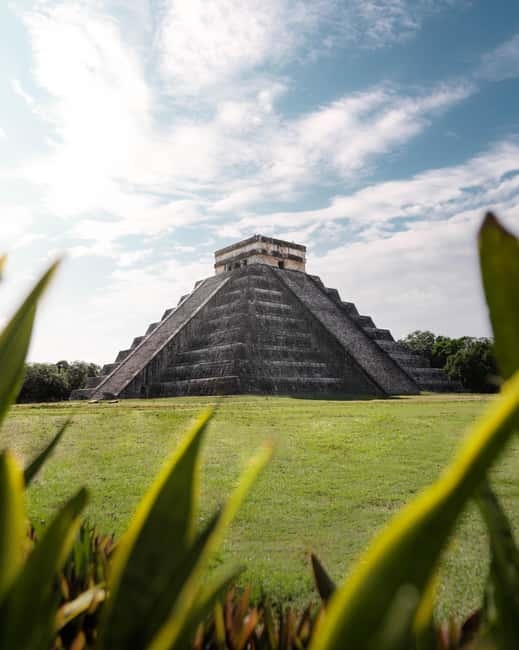
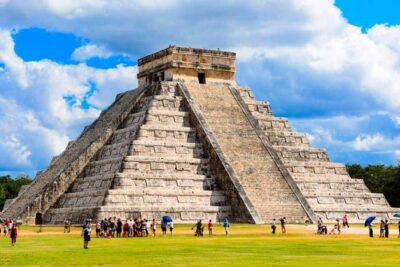
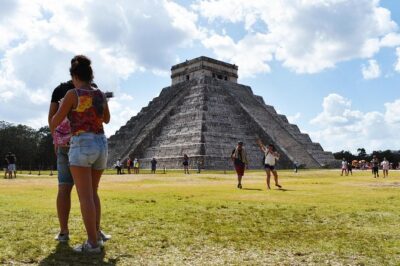
The tour’s central moment is El Castillo, also called the Temple of Kukulcan. This is the structure most people picture when they think of Chichén Itzá, and it deserves more than a quick photograph.
Your guide explains the building’s connection to Maya astronomy and the deity Kukulcan. The value here is not just learning a name or a date. You begin to see the pyramid as a carefully planned statement about time, the sky, ritual, and political power.
The pyramid is viewed from the outside, and you should not expect to climb it. The supplied information lists a visit to El Castillo and the Temple of Kukulcan, but it does not promise interior access or a climb. That is worth knowing if you are picturing a more physically demanding pyramid experience.
This is also one of the places where photo help can be useful. Guides have taken group pictures and suggested good angles for families and couples. You can hand over your phone for a quick shot, then return your attention to the explanation instead of trying to frame every image yourself.
The open setting means little shade. Even a short stop can feel long under the Yucatán sun, especially around midday. Wear light, comfortable clothing, bring water, and treat sunscreen as essential rather than optional.
The Great Ball Court and Maya sport

The Great Ball Court gives the tour a welcome change of pace. Its size and acoustics help you understand that the Maya ball game was not a casual pastime. The guide explains how the game worked and places it within Maya society and ceremony.
This part is especially effective for families and for anyone who is less drawn to dates and architectural terms. One family with boys aged four and nine found the 90-minute length manageable, and the ball game gave younger minds something concrete to picture. A guide can turn an unfamiliar ritual into a story about skill, competition, belief, and public life.
The court also helps show how the builders understood space and sound. The site’s acoustics are one of the details that can slip past you if you walk through alone. Your guide points out the way the area carries sound and links that design feature to the wider planning of Chichén Itzá.
Do not expect a modern sports demonstration. The value comes from the explanation, the scale of the court, and the chance to imagine how important the game was to the people who gathered here. If you are interested in ancient sport, architecture, or engineering, this may become one of your favorite stops.
A few more things to do in Mérida worth a look
- Merida : Guided tour of Uxmal, Kabah and Cenote with Lunch
★ 4.5 · 156 reviews - Chichén Itzá: Tour with Expert Tour Guide
★ 4.9 · 31 reviews - Teotihuacan Early Access Guided Tour with optional Lunch
★ 4.5 · 6,138 reviews - Tulum Ruins and Cenote Guided Tour, from Cancun
★ 4.5 · 2,592 reviews
The Sacred Cenote and the ceremonial landscape
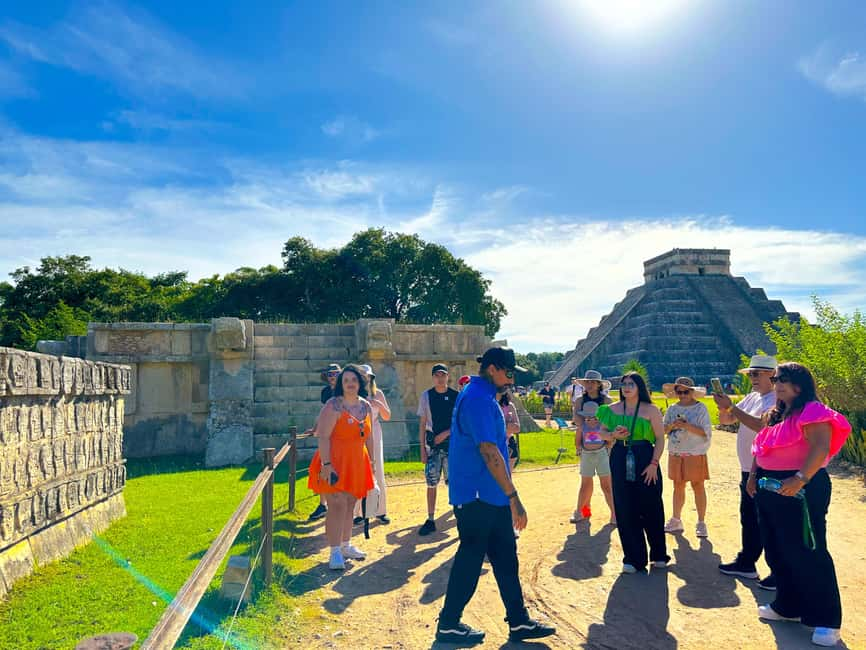
The Sacred Cenote adds another layer to the visit. It was connected to Maya ritual life, and the guide explains its religious meaning along with the role of natural features in the city.
This stop helps balance the tour. El Castillo is a monumental structure built upward, while the cenote draws your attention downward to water, the earth, and the natural setting. You get a better sense of how Maya ceremonial spaces were not planned separately from the environment around them.
The supplied tour details include a visit to the Sacred Cenote, but they do not promise swimming or access into the water. Plan on seeing and learning about the site rather than treating it as a swimming stop.
The walk between the major areas can be hot, and there may be stretches without much shade. Comfortable shoes are important. The route is a walking tour, and the experience is not suitable for wheelchair users, so anyone with mobility concerns should consider that before booking.
Stories about astronomy, ritual, and sound
The strongest reason to choose a certified local guide is the connection between separate facts. You may hear about Maya astronomy at El Castillo, rituals at the Sacred Cenote, and sound at the Great Ball Court. A good explanation shows how these ideas belong to the same culture rather than presenting them as disconnected trivia.
The guides praised in the supplied material include Omar, Santos, Pedro, René, Alexandro, Russell, Javier, Amaro, and Santo Mariano. Individual guide assignments can change, so you should not book on the assumption that you will receive one specific person. Still, the range of comments points to the qualities to expect: clear explanations, patience with questions, strong English in several cases, and a friendly manner.
One useful feature is the occasional use of an iPad to show reconstructions of the site. Ruins can be hard to read when you are looking at weathered stone. A visual recreation helps you picture color, form, and the way the buildings may have appeared when in active use.
I also like the chance to ask questions. A self-guided visit gives you freedom, but it leaves you to identify the questions on your own. With a private group, you can stop and ask about Maya astronomy, the ball game, architecture, or cultural practices without worrying about holding up a large coach group.
Shared bilingual or private monolingual?
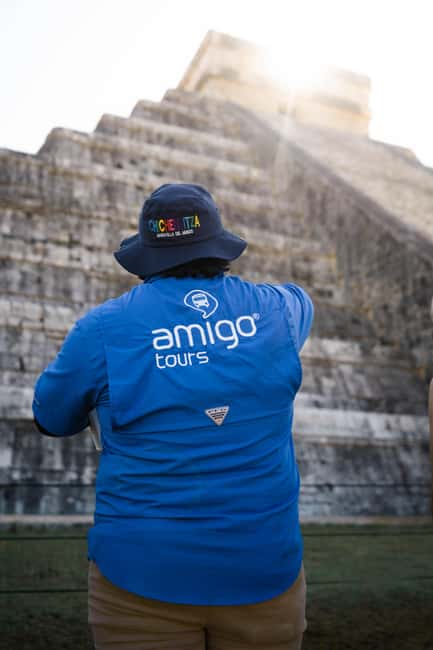
The shared option gives you live commentary in English and Spanish simultaneously. This is practical for mixed-language groups, but the format may feel less fluid than a private tour in one language. The guide must serve two language groups, so explanations can take longer or feel more divided.
The private option is available in English, Spanish, Italian, or Portuguese. A private guide is a better fit if you want to ask many questions, set the pace within the 90-minute limit, or keep the explanation in one language. Private tours require at least two people, so solo bookers should check the available option before selecting it.
For families, the shared tour may offer good value. The duration is short enough to keep young children moving, and the guide can adapt explanations to questions from both adults and children. One family found the guide accommodating to both age groups.
For serious archaeology fans, I would lean toward private. You will have more room to explore specific interests, though the tour still lasts 90 minutes. The private format does not turn this into an all-day archaeological study, but it should make the time feel more personal.
What the $52 price gets you

At $52 per person, the value depends on the ticket selection and the group format. The fee covers a 90-minute guided walking tour, a certified local guide, live commentary, and photography assistance. Admission is included only if you choose that option.
I think the strongest value comes from the interpretation. Chichén Itzá is a major archaeological site, and the cost of a guide is easier to justify when the visit becomes more than a series of photographs. You are paying for someone to connect architecture, ceremony, astronomy, and Maya culture in a way that is difficult to achieve from a sign or a guidebook alone.
The tour also avoids the cost and time of a large transportation package if you are already getting to the site yourself. You do not pay for a hotel pickup, bus ride, lunch, or extra stops that may not interest you. That is an advantage for independent visitors who want to control the rest of the day.
On the other hand, the price is less attractive if you expected transportation and admission to be included automatically. Check the exact option before booking. Also remember that 90 minutes is a compact tour. If you want several hours at the ruins, you may need to plan additional independent time.
Heat, walking, and what to bring
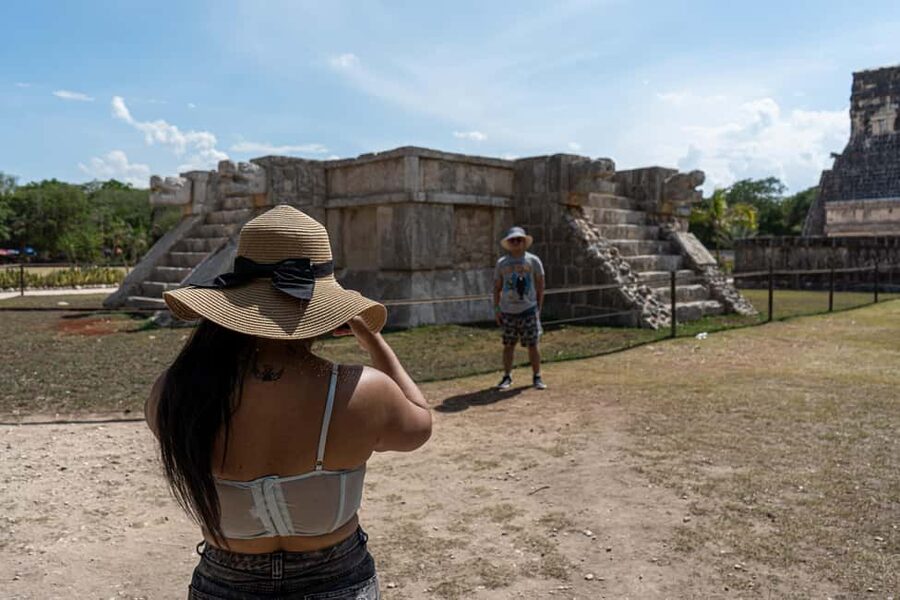
The Yucatán sun is the main physical challenge. Several comments describe the heat as intense, and that matches the open nature of the archaeological grounds. You can enjoy the tour much more if you prepare for it.
Bring:
- Water
- Sunscreen
- A hat
- Sunglasses
- Comfortable walking shoes
- Comfortable clothing
- A camera
- Cash
- Passport or another ID card
The site rules prohibit large bags and luggage, drones, professional cameras, tripods, food, smoking, alcohol, drugs, and touching plants or exhibits. Pack light and keep your phone ready for both photographs and the guide’s photo assistance.
The experience is not suitable for wheelchair users. The supplied details do not give a more specific accessibility assessment, so anyone with mobility needs should confirm suitability before booking.
Who will get the most from this tour?
I would choose this experience if you are arriving at Chichén Itzá on your own and want the main ideas explained by a local expert. It suits first-time visitors especially well, since the guide gives you a framework for understanding the site instead of leaving you to guess what each structure meant.
Families can also benefit from the focused format. Ninety minutes is long enough to see the key monuments but short enough to hold the attention of younger children. The ball court, stories about ancient sport, and photo stops give the walk variety.
The tour is also a good match for couples and small groups who care about photography. The guides can take pictures with your phone, and this is a small service that saves you from asking strangers or trying to fit everyone into a timer shot.
I would hesitate if you need transportation, dislike walking in strong heat, or want a full day of detailed site exploration. In that case, the tour may feel too brief. I would also avoid booking without checking the admission details, since the ticket is not automatically included in every option.
Booking details that matter
You can cancel up to 24 hours before the experience for a full refund, and the reserve-now, pay-later option keeps your plans flexible. Starting times vary, so you need to check availability for your date.
Children from zero to two years old are complimentary. Private tours require at least two people. Shared commentary is in English and Spanish at the same time, while private tours offer Spanish, English, Italian, and Portuguese.
Arrive at the Parador Turístico at least 10 minutes early. The guide is not meeting you at a hotel, and transportation to the site is not part of the experience.
Should you book the Chichén Itzá guided tour?
Book it if you want Chichén Itzá to make sense, not just look impressive. The guide-led format adds the most value at El Castillo, the Great Ball Court, and the Sacred Cenote, where astronomy, ceremony, architecture, and Maya culture come together.
Choose the private option if language clarity and questions matter most. Choose the shared bilingual option if you want a lower-cost, practical introduction and are comfortable hearing English and Spanish together.
My advice is to confirm three things before paying: the admission inclusion, the language format, and your ability to manage 90 minutes of walking in the heat. If those details suit your plans, this is a focused and useful way to experience one of the Yucatán Peninsula’s major archaeological sites.
FAQ
Where does the Chichén Itzá tour meet?
You meet the guide at Chichén Itzá Parador Turístico, identified as the meeting point for the official Mayan guide. Arrive at least 10 minutes before your booked time.
Is transportation to Chichén Itzá included?
No. Transportation to and from the archaeological site is not included, so you must arrange your own way to the meeting point.
Is the entrance ticket included in the price?
The entrance ticket is included only if you select the option that includes admission. Check the exact package before booking.
How long does the tour last?
The guided walking tour lasts 90 minutes, or 1.5 hours. Starting times depend on availability for your chosen date.
Which languages are available?
Shared tours provide commentary in English and Spanish at the same time. Private tours are available in Spanish, English, Italian, and Portuguese.
Can I book a private tour for one person?
Private tour options require a minimum of two people. Solo visitors should check the available shared options.
What should I bring to the tour?
Bring your passport or ID card, comfortable shoes, sunglasses, a hat, camera, sunscreen, water, comfortable clothing, and cash. Large bags, luggage, drones, professional cameras, tripods, food, alcohol, and drugs are not allowed.
Just added in Mérida
- Chichen Itza Full Day Tour★ 5.0 · 223 reviews
- Private Tour Uxmal Ruins and Chocolate Museum plus Cenote★ 5.0 · 43 reviews
- Private Merida Tour on a Budget – Best Rated★ 4.5 · 89 reviews
- Private Tour Chichen Itzá and Cenote plus Valladolid Magic town★ 5.0 · 30 reviews
- Private Tour Cenotes of Mucuyche & Santa Barbara in one day★ 5.0 · 56 reviews
- Merida : Chichen Itza, Izamal and Cenote with lunch and pick up★ 4.5 · 132 reviews
- Chichen Itza Elite Private Tour from Merida★ 5.0 · 58 reviews
- Chichen Itza Cenote and Magic Izamal★ 5.0 · 80 reviews
Chichén Itzá Tours, compared.
Chichen Itza, Cenote & Valladolid Tour with Tequila and Lunch
Read our review →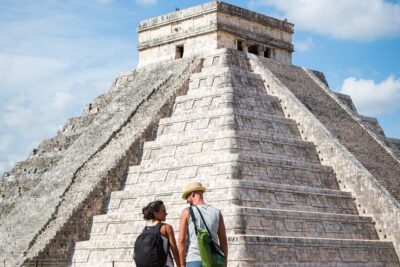
Early morning Chichen Itza Tour: Cenote and Tequila Tasting
Read our review →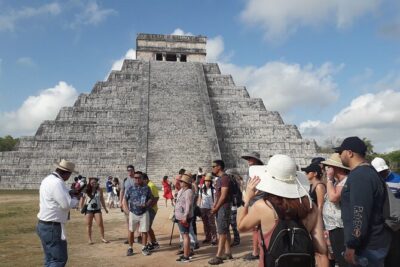
Chichen Itza Early Access All Inclusive: Hotel Pick up & All Fees
Read our review →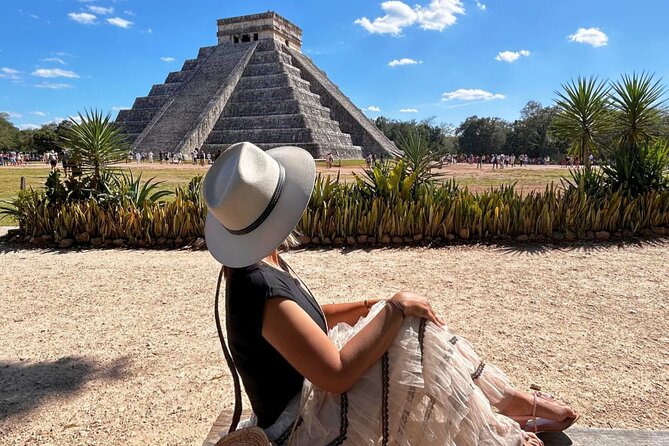
Chichen Itza Gastronomic, Valladolid and Cenote Extremo
Read our review →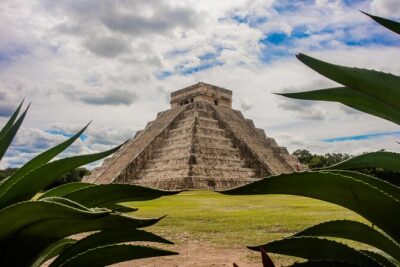
Chichen Itza, Cenote and Valladolid Small Group Day Trip
Read our review →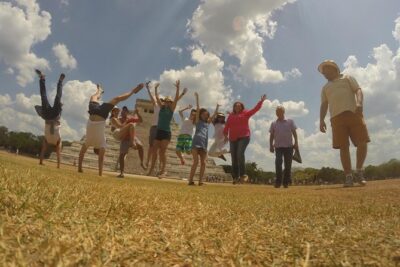
Chichen Itza Day Trip Exclusive Nool-Ha Cenote & Valladolid Visit
Read our review →Browse the lists this tour appears in