
Reviewed · TOURS IN MONTERREY
Nido de los Aguiluchos, Monterrey: Hiking + Rock Climbing + 3 Rappels
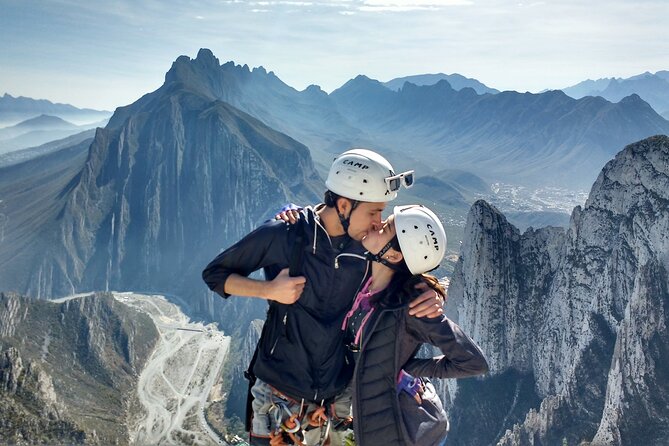
Nido de los Aguiluchos is not a casual morning walk. It is a steep mountain route through Monterrey’s Huasteca area, with scrambling, assisted climbing, narrow exposed sections, zip lines, and three rappels. The reward is a sunrise view across the mountains and valley that makes the hard work feel worthwhile.
I like the way the tour combines several skills in one outing, and I like the strong guide presence. Omar, Denise, Luis, Ramses, Cedric, Jimi, Tony, and Adán are among the guides praised for calm instruction and bilingual support. The main caution is simple: the “all levels” label needs context. No climbing experience is required, but good fitness, sure footing, and a steady head for heights are essential.
Key points at a glance
- Sunrise start: Meet at the H-E-B Gonzalitos at 5:00 am for an early departure and cooler mountain conditions.
- Three rappels: The descents are a major part of the experience, with dramatic views behind you as you lower down the rock.
- Assisted climbing: Metal rungs, ropes, and safety cables help you cross the route, but you still need to scramble over loose and steep ground.
- Small groups: The standard tour is capped at 15 people, with private departures available on request.
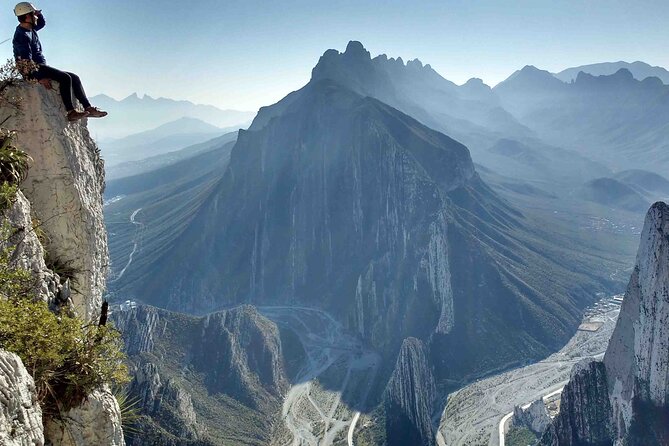
- Strong views: The route opens onto wide views of Monterrey, the Huasteca mountains, and surrounding valleys.
- Come prepared: Wear hiking shoes, carry plenty of water, pack a snack, and bring light gloves for the rock and cables.
A 5:00 am start in Monterrey
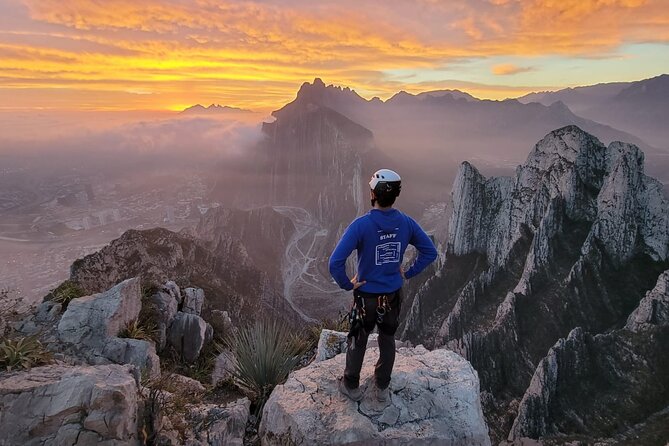
Your day begins at the H-E-B Gonzalitos on Avenida Dr. José Eleuterio González. The early meeting time is not a typo. Morning departures help you avoid the worst heat and can put you on the mountain as the sky brightens.
Round-trip transport in an air-conditioned vehicle is included. That matters here because the outing already demands plenty from your legs and arms. You can leave the driving to the company, return to the same meeting point at the end, and focus on the activity rather than city traffic.
The stated duration is about seven hours. The exact rhythm depends on the group, guide pace, weather, and time spent waiting for each person to rappel. Some outings have completed the active route in a little over four hours, while other groups have remained out from roughly 6:00 am until 12:30 pm. Plan your day around the full morning rather than a tight later appointment.
A few more things to do in Mexico worth a look
- Matacanes : Canyoning + Hiking + Water Jumps + Rappel + Caves
★ 5.0 · 1,497 reviews - Puerto Vallarta: Full Day Hike to 6 Hidden Beaches & Snorkel
★ 4.8 · 403 reviews - Los Cabos: Hiking at the Fox Canyon with Waterfall
★ 5.0 · 369 reviews
The first climb is the real fitness test
The route begins with a hike toward the first viewpoint. This section is often the hardest physical part because you gain ground on a steep, rough trail before the climbing equipment takes over.
Expect loose rock, uneven footing, scrambling, and sections that call for hands as well as feet. The total distance may be around three miles, but mileage does not tell the story. A short route on steep rock can be far more tiring than a longer walk on a flat trail.
You should be able to maintain a decent pace on an incline and recover after short bursts of effort. One useful comparison from the experience is the ability to run a 5K, though that is not a formal requirement. Regular hikers and fit couples have found it demanding but manageable. If you are not used to steep mountain activity, the opening climb may feel punishing.
This is where footwear matters. Hiking shoes or boots with a secure grip are a much better choice than casual sneakers. Pack at least two to three liters of water, especially in warm weather, and bring a small snack. A few people have nearly run out of energy because they arrived without enough water.
Metal rungs, cables, and exposed rock
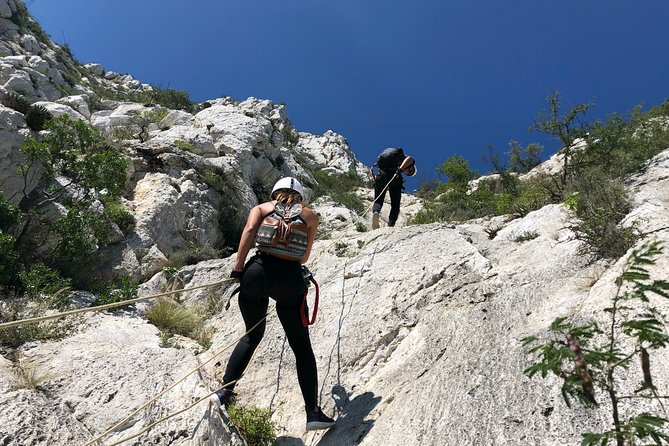
After the initial hike, the outing shifts into assisted climbing. You use fixed metal rungs, ropes, and safety cables to move along the rock and ridge. The route has a via ferrata feel, though the terrain remains rough and natural rather than a polished climbing park.
The equipment gives you support and protection, but it does not remove the physical work. You still pull yourself over rock, place your feet carefully, and move through narrow or exposed passages. At times, the safest approach is slow and deliberate rather than fast.
This section is suitable for a first-time climber who is fit, attentive, and comfortable following instructions. You do not need formal rock-climbing experience. You do need to listen closely when the guide explains where to clip, how to move, and how to handle the exposed portions.
The guides are an important part of the value. Omar and Jimi have been praised for professional instruction, while Ramses and Cedric have been noted for bilingual explanations. Denise and Luis have also helped first-time participants feel comfortable before technical sections. Guide assignments can change, but the experience is designed around direct help rather than sending you onto the route alone.
Three rappels with Huasteca views
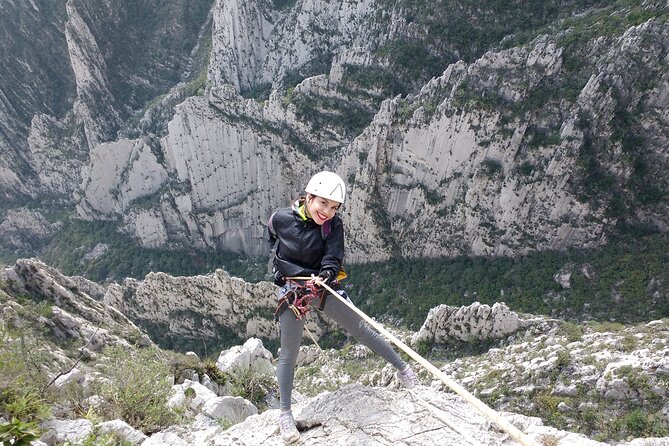
The rappels are the signature moments of the tour. For a first-timer, the first step backward over the edge can be the most intimidating part of the entire morning. You may feel secure in the harness and rope system yet still find the height unsettling once your feet leave the rock.
The route includes three rappels, and each gives you a different view of the valley. You descend with the Huasteca mountains and open air behind you, sometimes suspended high above the ground. The second and third descents can feel easier once you understand the technique, though the exposure remains real.
Your guide controls the setup and talks you through the procedure. Good instruction matters most at the beginning, when you must lean back, trust the system, and manage the rope correctly. Several guides have been praised for staying serious about safety without making the experience feel tense.
The rappels also affect the timing. A group of 15 can take longer to move through each descent than a smaller private party. You may spend time waiting your turn, so bring water within easy reach and protect yourself from the sun while you wait.
Same base, a different sort of day:
- Chichen Itza, Cenote, and Valladolid Tour
★ 5.0 · 24,293 reviews - Chichen Itza, Cenote & Valladolid Tour with Tequila and Lunch
★ 4.5 · 15,789 reviews - Teotihuacan, Guadalupe Shrine & Tlatelolco Day Tour with Lunch
★ 5.0 · 11,603 reviews - Cabo Beach Camel Ride, Mexican Buffet and Tequila Tasting
★ 5.0 · 8,815 reviews
Zip lines and the ridge traverse
The zip lines add a short burst of speed to a route that otherwise asks you to climb, scramble, and descend under your own control. They are part of the appeal for people who want more than a standard hike but do not want a full technical climbing course.
Between the zip lines and rappels, you cross ridge sections with safety cables and metal footholds. Some passages are narrow, and the drop beside you can make an ordinary step feel important. If you are afraid of heights, the setting may be too intense. The operator specifically does not recommend the experience for people with a strong fear of heights.
The route can also include loose gravel and scree. Going uphill on this material takes effort, while coming back down requires care. One practical point is easy to miss: some of the descent follows the same rough ground you climbed earlier. Good balance and controlled steps matter just as much on the return as they do on the ascent.
Reaching the summit and looking across Monterrey
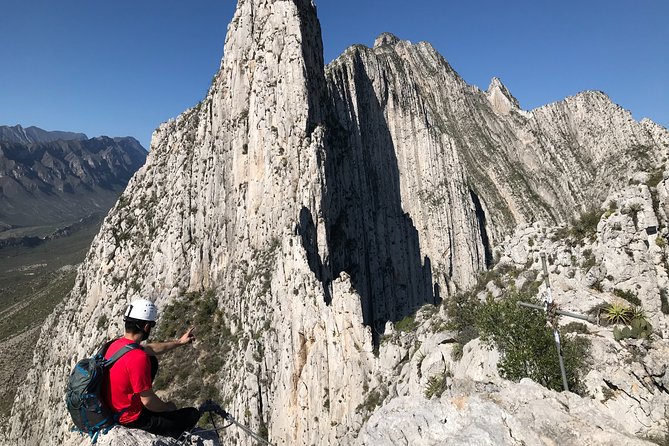
The summit section is the payoff. From above, you can see the Huasteca mountains, the valley, and Monterrey spread below. The early start gives the views a special quality, with morning light building across the rock and city.
This is not a viewpoint reached by road or a short paved walk. You have worked for it through steep trail, scrambling, cables, climbing, and exposed sections. That effort changes how the view feels. I like experiences where the scenery is tied to a genuine physical achievement, and this one delivers that connection.
The summit is also a good place to understand why the tour takes most of a morning. The climb is not just a quick photo stop followed by a simple walk back. You still have the descent, technical sections, rappels, and group pacing ahead of you.
Bring sun protection, including sunscreen, sunglasses, and a hat that fits comfortably under a helmet. A backpack should be light enough not to interfere with the harness and cables. You may also want light gloves or biking gloves, especially if your hands are not used to gripping rough rock and metal lines.
What the $115.95 price covers
At $115.95 per person, the tour is priced as a guided adventure rather than a simple hiking transfer. The fee includes climbing equipment, professional guides, transportation in an air-conditioned vehicle, and all listed fees and taxes.
The value comes from the technical support and logistics. You receive the equipment and instruction needed for the assisted climb and rappels, plus transport from Monterrey. If you tried to arrange the route without a guide, you would still need to handle access, equipment, route knowledge, and safety decisions yourself.
The price does not include video service. Some outings have access to GoPro or photo options through Gaia Xtreme Tours, but you should treat that as an add-on rather than part of the advertised package. Bring your own phone only if it can be secured safely. A loose device is a poor match for scrambling and rappelling.
A private tour is available if you want more control over the pace or a more personal setup. A standard group can include up to 15 people, though smaller groups may feel more comfortable on the narrow technical sections and move through the rappels faster.
Is it really suitable for first-time climbers?
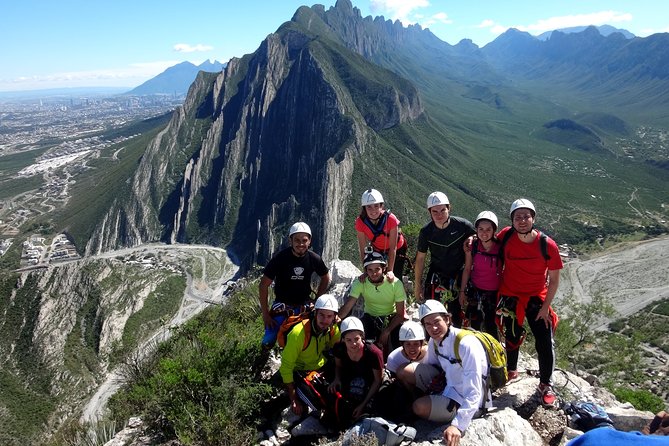
Yes, if you interpret first-time climber correctly. You can arrive without rock-climbing experience and receive hands-on guidance. You should not arrive without preparation.
The route is better described as an intermediate to demanding mountain adventure with beginner-friendly instruction. Several fit participants found it manageable, while others felt it was harder than expected. The difference often comes down to heat, fitness, comfort on loose rock, and reaction to exposure.
You should be able to:
- Walk uphill for several hours with rest breaks.
- Scramble over uneven rock using hands and feet.
- Keep moving while wearing climbing equipment.
- Follow safety instructions carefully.
- Remain calm on exposed ledges and rappels.
- Carry enough water and a small snack.
Children under 12 are not recommended. The tour also requires a moderate physical fitness level, but I would prepare for more than a gentle interpretation of moderate. If you are a regular hiker, runner, climber, or active outdoor person, you have a better starting point. If you prefer easy trails, this is the wrong outing.
Group size, language, and guide support
The tour is offered in English and can also support bilingual communication through guides who speak Spanish and English. That is useful during equipment briefings, where a small misunderstanding can create a real problem.
A cap of 15 people keeps the standard group from becoming unwieldy, though the technical nature of the route means a smaller group may still feel better. If you are nervous about rappelling, a smaller party gives you more direct attention and may reduce waiting time.
The named guides associated with strong experiences include Omar, Jimi, Ramses, Cedric, Denise, Luis, Tony, and Adán. You cannot assume a particular person will lead your departure, but the consistent practical point is to pay attention to the briefing and ask questions before you reach the first exposed section.
Weather, cancellations, and basic logistics
This activity requires good weather. If poor conditions force a cancellation, you are offered another date or a full refund. The same applies if the minimum number of participants is not reached, with the option of another date or experience.
Your own cancellation policy is strict: the booking is non-refundable and cannot be changed for any reason. Read that condition carefully before paying, especially if your Monterrey schedule is uncertain.
There are no facilities along the route. Plan to use a bathroom before departure and be prepared for a nature stop if needed. The early start, heat, water needs, and lack of facilities make a little preparation especially useful.
Who should book Nido de los Aguiluchos?
I would book this if you want a serious adventure day rather than a scenic walk. It is a strong fit for active couples, solo adventurers, friends, and first-time climbers who are physically ready and curious about rappelling.
I would skip it if you dislike heights, have trouble with steep or loose ground, or want a relaxed introduction to Monterrey’s mountains. The activity can be thrilling, but it is not gentle. Give yourself an easy day afterward because your legs may feel the effort.
The best preparation is basic: sleep well, avoid arriving dehydrated or hung over, wear hiking shoes, bring gloves, carry plenty of water, and pack a snack. Do not let the no-experience-needed wording convince you that fitness is optional.
FAQ
Where does the Nido de los Aguiluchos tour start?
The meeting point is H-E-B Gonzalitos, at Av. Dr. José Eleuterio González 315 in Monterrey. The scheduled start time is 5:00 am, and the activity returns to the same meeting point.
How long does the activity last?
The listed duration is approximately seven hours. The active hiking and climbing portion can vary based on group pace, waiting time for rappels, and conditions.
Are three rappels included?
Yes. The experience includes three rappels, along with hiking, assisted climbing, safety cables, metal rungs, ropes, and zip lines.
Do I need climbing experience?
No formal climbing experience is required. You do need a moderate level of physical fitness, comfort with heights, and the ability to follow guide instructions on steep and exposed terrain.
What is included in the price?
The price includes climbing equipment, professional guides, an air-conditioned vehicle, and all fees and taxes. Video service is not included.
Is the tour suitable for children?
Children under 12 are not recommended. The activity is also not recommended for people who are afraid of heights.
Should you book it?
Book Nido de los Aguiluchos if the thought of scrambling up rock, clipping into safety cables, and rappelling over the Huasteca valley sounds exciting rather than alarming. The combination of technical activity and wide mountain views gives you far more than a standard hike, and the guide support makes a first climbing experience possible.
Just set your expectations correctly. This is a demanding route with loose rock, steep passages, exposed heights, and a very early start. If you bring the right shoes, enough water, light gloves, and a realistic view of your fitness, the $115.95 price buys a memorable, well-supported adventure.
Just added in Mexico
- Akumal: Dolphin Encounter★ 4.4 · 56 reviews
- Acapulco City Tour★ 5.0 · 133 reviews
- Hiking Excursion to the Iztaccíhuatl Volcano from Puebla★ 5.0 · 74 reviews
- Valladolid Mayan Bees Tour with Lunch or breakfast and Honey Tasting★ 5.0 · 193 reviews
- Whale Watching Cabo-Women crew-Sightings Guaranteed & Free Photos★ 5.0 · 1,743 reviews
- Guided tour of an ancestral Mezcal distillery with transport★ 5.0 · 240 reviews
- Ixtapa Island Tour★ 4.5 · 134 reviews
- ATV Off-Road Adventure through Valle de Guadalupe + Winery Visit★ 4.5 · 201 reviews
Tours in Monterrey, compared.
Matacanes : Canyoning + Hiking + Water Jumps + Rappel + Caves
Read our review →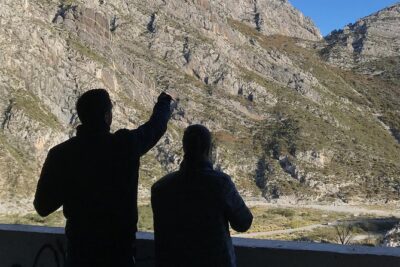
The Grutas de Garcia & Town (Cablecar Ticket + Premium SUV)
Read our review →Browse the lists this tour appears in