
Reviewed · TOURS IN MEXICO CITY
Turibus Hop On Hop Off Mexico City Tour
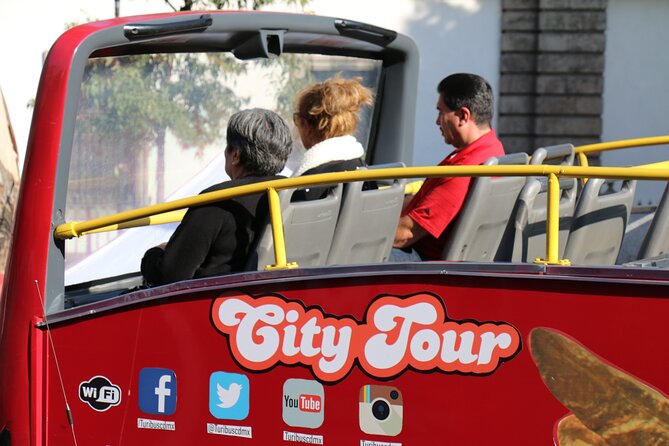
Mexico City’s Turibus is useful for one big reason: it gives you a quick look at a huge city without making you wrestle with unfamiliar buses, taxis, and traffic. You can ride past the Angel of Independence, Zócalo, Chapultepec, Coyoacán, Polanco, and UNAM, then hop off when a place catches your eye.
I like the four themed routes and the choice between an open-top seat and an air-conditioned lower deck. I also like the multilingual audio guide and discount booklet, which make this a practical first-day orientation. The main catch is that operations can change, and the current notice says only the Historic Downtown Route is running from 9 a.m. to 7 p.m. until further notice.
Key points to know before you board
- Four different Mexico City routes: Cover the Historic Center, Polanco, South, and Basilica areas with one ticket when all routes are operating.
- A useful first look at a very large city: See major monuments and neighborhoods before deciding where to spend more time.
- Hop off at museums and markets: Stops include Museo Nacional de Antropología, Museo Soumaya, Frida Kahlo Museum, Mercado Roma, and Coyoacán.
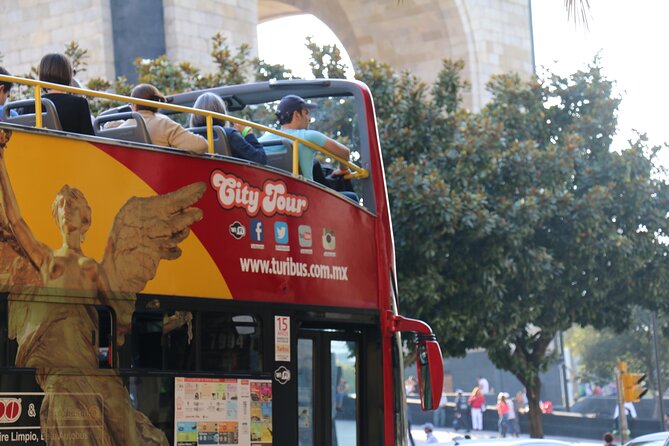
- Open-air or air-conditioned seating: The upper deck gives you better views, while the lower level offers shelter from sun and weather.
- Service changes matter: Traffic, demonstrations, street closures, public events, and Sunday’s Ciclotón can alter routes and schedules.
- Best value comes from planning: The ticket makes more sense when you use several routes or stops, not when you simply ride one short loop.
Why the Turibus works well for a first look at Mexico City
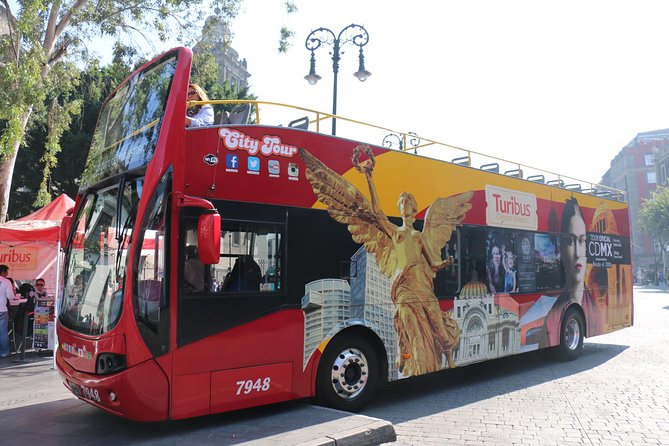
Mexico City is not a city you understand from one central square. Its museums, parks, grand avenues, markets, university grounds, and neighborhood cafés spread across a wide area. The Turibus connects many of those places in a simple sightseeing format, letting you get your bearings before committing to a detailed day of exploration.
The basic ride takes about three hours if you stay aboard. In practice, you should think of it as a flexible transportation pass rather than a fixed three-hour tour. You can remain on the bus for an overview, hop off to visit a museum or plaza, and catch a later bus on the same route.
The audio commentary provides information in multiple languages, including English. You receive headphones at the ticket office. This is not a private guide walking beside you, so the experience is more about orientation and background than detailed conversation or personal recommendations.
You can show your mobile voucher at the stops and board there. That flexibility is handy if you are already near the Angel of Independence, Zócalo, Auditorio Nacional, or another listed stop. You do not need to begin at a single central departure point.
Other trips people book in Mexico City:
- Teotihuacan, Guadalupe Shrine & Tlatelolco Day Tour with Lunch
★ 5.0 · 11,603 reviews - Xochimilco, Coyoacan and Frida Kahlo with Optional Lunch
★ 4.5 · 7,320 reviews - Balloon flight + Breakfast in cave + Pyramids + Pick up CDMX.
★ 5.0 · 6,335 reviews
The Historic Center route, from Auditorio to Zócalo
The Historic Center route is the most useful choice if you have limited time. It links the western and central parts of the city, moving through major museums, Reforma, and the old city center.
At Auditorio Nacional, you are near Chapultepec and the large cultural institutions around the park. The route then moves to the Museo de Arte Moderno, a good stop for modern Mexican art, and onward to La Condesa. Condesa is known for its tree-lined streets, cafés, and relaxed neighborhood feel, though the bus stop alone will not give you much time to explore it.
The Fuente de Cibeles stop gives you access to another lively neighborhood area, while Casa Lamm offers a cultural stop in the Roma district. This part of the route is useful if you want to compare Mexico City’s older monumental core with its more contemporary residential neighborhoods.
The Angel of Independence is one of the most recognizable sights on Paseo de la Reforma. It is also a practical place to hop off, take photographs, and continue on foot for a short stretch. The nearby Reforma 222 stop serves a large shopping and commercial complex, while the Museo de Cera offers a lighter museum visit.
The route continues toward the Monument to Cuauhtémoc and then into the center. Stops on Avenida Juárez, at Zócalo, and around Plaza Manuel Tolsá put you near some of the city’s strongest cultural sights. Zócalo is the essential stop, with the Metropolitan Cathedral, National Palace, and broad main square nearby.
Plaza Manuel Tolsá is close to several historic buildings and museums. The Museo Franz Mayer is a worthwhile choice if you like decorative arts, while Plaza de la República leads toward the Monument to the Revolution. Museo San Carlos adds another art option before the bus returns along Reforma.
The route includes several Reforma stops, including the Angel of Independence again, Paseo de la Reforma near Río de la Plata, and the Museo Nacional de Antropología. That last stop is one of the most important on the entire network. If you want to visit the museum properly, allow much more time than a quick hop off. The exhibits are extensive, so a short stop will only give you a taste.
If you have only half a day, I would stay on this route and choose two stops at most. A practical combination is Zócalo plus either Chapultepec and the anthropology museum or the Monument to the Revolution. Trying to see every stop will leave you with photographs but little time inside the places that matter.
Polanco route, with Soumaya and Masaryk Avenue
The Polanco route begins around Auditorio and moves through one of Mexico City’s most polished commercial and cultural districts. Calle Arquímedes and Avenida Presidente Masaryk are useful stops for seeing the neighborhood’s upscale side.
Antara is a modern shopping and dining area. Museo Soumaya is the main cultural draw here, with its unusual exterior and broad art collection. The stop is especially convenient if you want an indoor museum visit without returning to the Historic Center.
The route also reaches Hipódromo de las Américas and Papalote Museo del Niño. Papalote is aimed at children, so families may find this route more useful than visitors focused only on monuments. The Polanco loop is also a sensible choice on a hot afternoon, since you can combine museums, shopping areas, and the bus’s lower air-conditioned level.
This route is less important for a first-time visitor who wants colonial architecture and central plazas. It becomes more valuable if you have a second day, enjoy museums, or are traveling with children.
The South route, from Roma to Coyoacán and UNAM
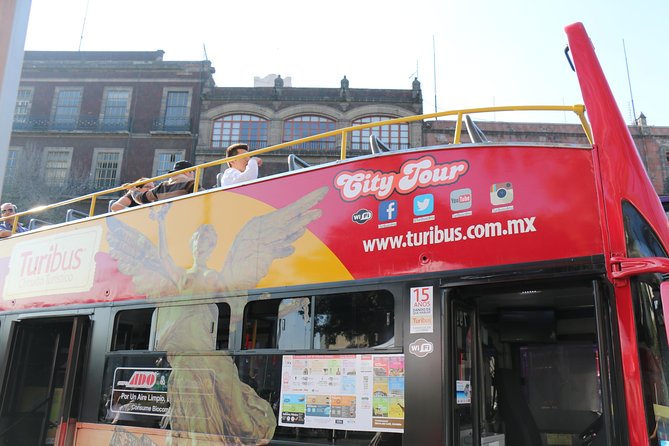
The South route has the greatest range of stops. It begins at Fuente de Cibeles, then heads through Mercado Roma, the World Trade Center area, and the Monumental Plaza de Toros México.
Mercado Roma is a convenient place to stop for food, though meals and drinks are not included in the ticket. The market gives you a break from sightseeing and a chance to see a more local food-focused side of the city.
Farther south, the route reaches Avenida de la Paz, Estadio Olímpico Universitario, Perisur, and Avenida Centro Comercial. The university area is the main reason to choose this route. Stops include Universum, University City, Rectoría de la UNAM, and the Alfredo Guati Rojo National Watercolor Museum.
UNAM’s University City is a major cultural area, but it is spread out. Do not expect one quick stop to cover everything. If you get off around the university, check the next bus timing before wandering too far, since route frequency can vary.
The route then reaches Coyoacán, Aguayo, and the Frida Kahlo Museum. Coyoacán is one of the best places on the network for a slower neighborhood visit, with plazas, market areas, and a different feel from Reforma and the central avenues.
The Frida Kahlo Museum is a popular stop, but this bus ticket does not include museum admission. If you plan to visit it, allow enough time for the museum itself and keep in mind that getting off the bus changes the pace of the day.
For many people, the South route is the most rewarding route after the Historic Center. It links food, university culture, Coyoacán, and the Frida Kahlo Museum. It is also the route most likely to frustrate you if traffic or bus delays eat into your schedule.
Same base, a different sort of day:
- Teotihuacan pyramids morning or afternoon without tourist traps
★ 5.0 · 6,186 reviews - Teotihuacan Early Access Guided Tour with optional Lunch
★ 4.5 · 6,138 reviews - Balloon flight + pick up in CDMX + Breakfast in Cave + Pyramids
★ 5.0 · 5,651 reviews - Balloon Flight + Cave Breakfast + Pick Up from CDMX or We Fly
★ 5.0 · 4,410 reviews
The Basilica route, with Garibaldi and Tlatelolco
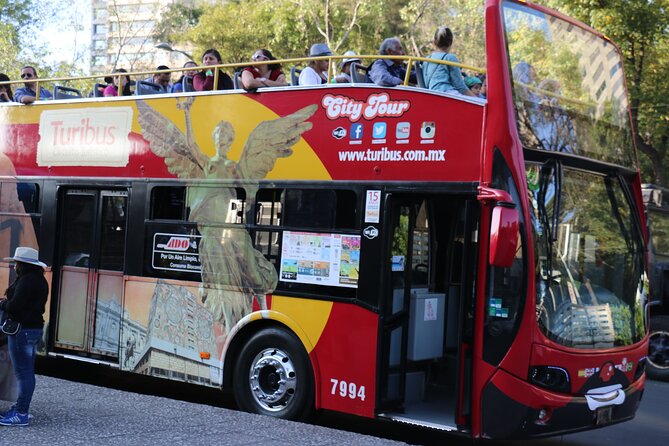
The Basilica route is shorter and more focused. It begins at Zócalo and continues to Garibaldi Plaza, Tlatelolco, and the Basilica area, with a final stop near the Palace of the Counts of Miravalle.
Garibaldi Plaza is associated with mariachi music and offers a different atmosphere from the formal central squares. Tlatelolco is an important historical and archaeological area, so this route adds context beyond the city’s grandest monuments.
The Basilica is the main destination. If the bus cannot reach it for reasons beyond the operator’s control, the route will go to Plaza de las Tres Culturas instead. That is a useful fallback, but it is not the same visit, so check the day’s route conditions if the Basilica is your main reason for booking.
This route is a good add-on when you have extra time. It is less efficient than the Historic Center route if your priority is seeing the city’s best-known central sights in a single day.
Open-top views, audio, and the pace of the ride
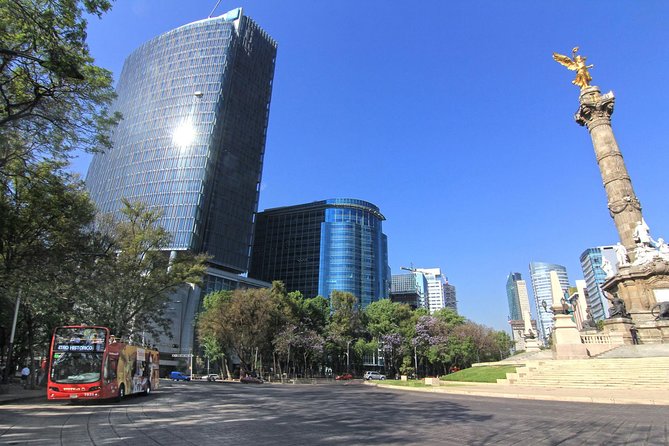
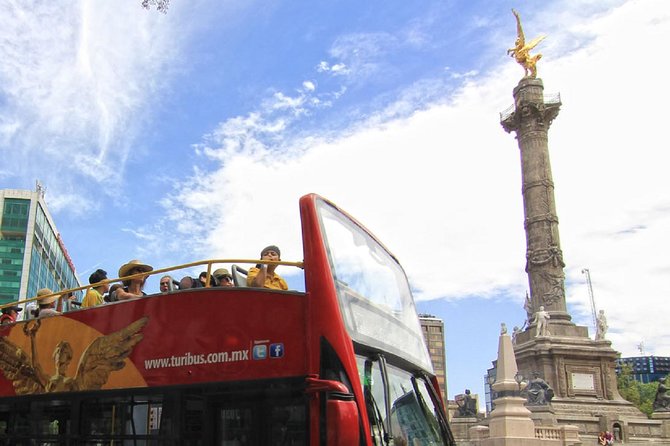
The open top is the natural choice for views along Reforma and for seeing Mexico City’s scale. It also makes photographs easier. Sun, wind, rain, and traffic fumes are part of the bargain, so bring protection for changing weather.
The lower level is air-conditioned and more comfortable when the sun is strong. It is also the better choice if you prefer a quieter, more sheltered ride. You may give up some views, but you will be less exposed during long stretches in traffic.
The commentary comes through a multilingual digital audio system. It helps explain what you are passing, but you should not expect a live guide to answer questions or reshape the route around your interests. Use it as background while looking out the window, then save serious museum time for your stops.
How to judge the value of the ticket
The price is not provided here, so I cannot make a fair claim about the exact cost. The value depends on how much of the network you use and how much you would otherwise spend on separate rides between distant areas.
The ticket is strongest for a first day when you want to see several parts of Mexico City without planning every transfer. It also has practical value for anyone uneasy about navigating public transit or negotiating taxi rides in heavy traffic.
The coupon booklet may reduce the cost of selected local experiences, but the actual savings depend on which offers are useful to you. Treat it as a possible bonus, not the main reason to buy.
If you ride only one short segment and do not get off, the value is weaker. If you use the Historic Center route, add a second route, and make several stops, the ticket becomes easier to justify.
Timing problems you should plan around
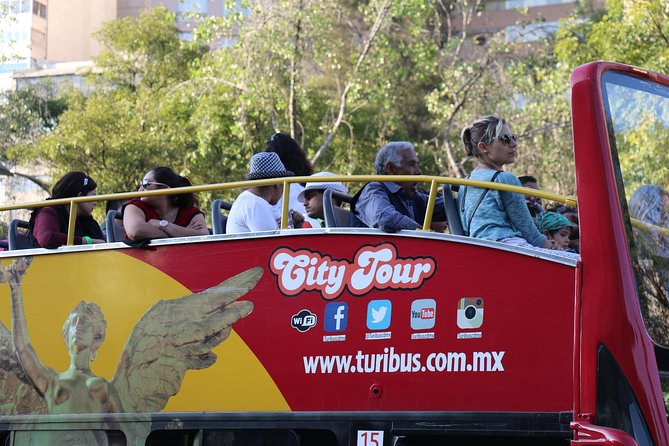
The service carries several important warnings. Route changes, reduced frequency, delays, demonstrations, celebrations, road closures, and traffic can affect the buses without prior notice. Mexico City’s traffic can turn a simple loop into a slow ride.
On Sundays from 8 a.m. to 2 p.m., the Ciclotón closes some streets. Turibus uses alternative roads during that period, so the route may not match the printed stop order.
There is also a current operational notice saying that the service is operating only the Historic Downtown Route, from 9 a.m. to 7 p.m., until further notice. This is the most important practical issue. The booking information describes four routes and may offer one or two day options, but the current operating notice may limit what you can actually use.
The tickets are described as valid for one operating day. If you see a one-day or two-day choice while booking, confirm exactly what the selected option covers and check the latest route status before setting your plans.
Free cancellation is available if you cancel at least 24 hours before the experience start time. Inside that window, refunds are not provided, and changes are not accepted.
Who should book the Turibus
I would suggest this tour for first-time visitors who want a broad introduction, families who prefer simple transport between sights, and anyone who wants to compare neighborhoods before choosing where to spend a full day.
It also suits visitors with limited mobility or those who would rather avoid a long series of public transit changes, although the supplied information says only that most people can participate and does not provide detailed accessibility specifications.
I would be more cautious if you want a tightly scheduled museum day. Traffic and changing bus frequency make the timing less predictable than a private car or a carefully planned metro route. You should also think twice if your main goal is a detailed guided history lesson, since the commentary is recorded audio.
Should you book this Mexico City bus tour?
Book it if you want a flexible city overview and will use the bus for several stops. The Historic Center route is the safest starting point, especially for Zócalo, Reforma, Chapultepec, and the major museums.
Choose the South route for Coyoacán, UNAM, and the Frida Kahlo Museum, and choose Polanco for Soumaya and the city’s modern commercial side. Add the Basilica route when its destination is important to you and the route is confirmed.
Before paying, verify which routes are operating on your date. That one check matters more than the promise of four routes, since current service may be limited to Historic Downtown. Used with realistic timing, the Turibus is a handy introduction. Used as a precise all-day transport plan, it may test your patience.
FAQ
How long does the Turibus Mexico City tour take?
The sightseeing ride takes approximately three hours if you remain on board. Hop-on-hop-off use can take longer because you may get off at stops and wait for a later bus.
Which routes are available?
The network includes the Historical Center, Polanco, South, and Basilica routes. Current operations can change, and the latest notice says only the Historic Downtown Route is operating from 9 a.m. to 7 p.m. until further notice.
Can I use one ticket on all routes?
The ticket includes all routes and stops according to the stated itineraries. The tickets are valid for one operating day, so confirm the selected booking option and current route availability before your visit.
Is audio commentary included?
Yes. A multilingual digital audio system is included, and headphones are provided at the ticket office. English is one of the offered languages.
Is food included?
No. Lunch, beverages, and other services not specifically listed are not included.
Can I cancel for a full refund?
Yes, if you cancel at least 24 hours before the experience start time. Cancellations or changes made within 24 hours are not eligible for a refund.
Just added in Mexico City
- Mexican Wrestling: Experience Lucha Libre in Mexico City★ 4.0 · 228 reviews
- Tolantongo Caves Hot Springs & Waterfalls Small Group Tour★ 4.5 · 254 reviews
- Cuernavaca and Taxco Tour from Mexico City★ 4.0 · 88 reviews
- Mexico City: Taxco & Cuernavaca Tour with Pre-Hispanic Mine★ 4.6 · 271 reviews
- A Night of Tacos and Mezcal in Mexico City★ 5.0 · 262 reviews
- Mexico City: Tequila and Mezcal Museum Tour with Tasting★ 4.8 · 301 reviews
- From Mexico City: 10-Hour Cuernavaca and Taxco Tour★ 4.0 · 133 reviews
- Street Food Tour with Friends★ 5.0 · 326 reviews
Tours in Mexico City, compared.
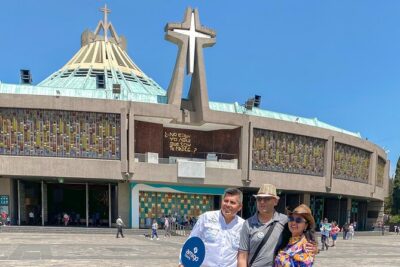
Teotihuacan, Guadalupe Shrine & Tlatelolco Day Tour with Lunch
Read our review →
Xochimilco, Coyoacan and Frida Kahlo with Optional Lunch
Read our review →
Balloon flight + Breakfast in cave + Pyramids + Pick up CDMX.
Read our review →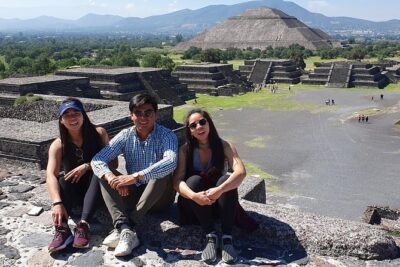
Teotihuacan pyramids morning or afternoon without tourist traps
Read our review →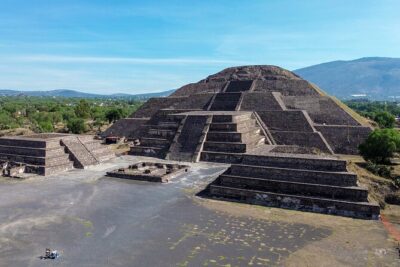
Teotihuacan Early Access Guided Tour with optional Lunch
Read our review →
Teotihuacan Hot Air Balloon Flight from Mexico City / Volare
Read our review →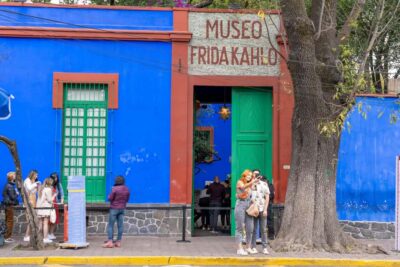
Xochimilco, Coyoacan, Frida Kahlo Museum & Murals Tour
Read our review →
Hot Air Balloon Flight with Breakfast Cave and Pyramids Tour
Read our review →Browse the lists this tour appears in