
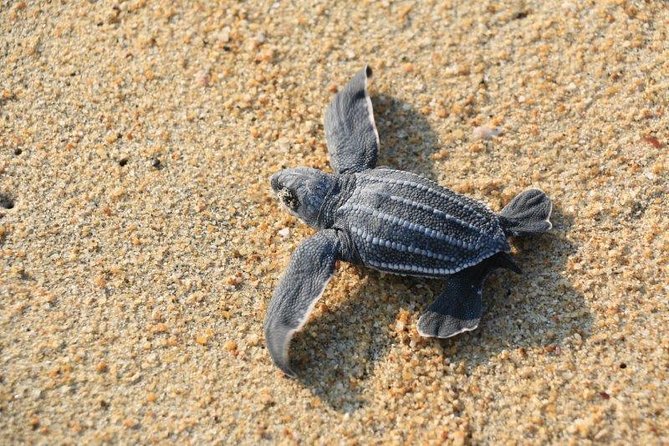
Reviewed · TURTLE SNORKELING TOURS
Turtle Release Escobilla Sanctuary and crocs in Ventanilla.
The most moving part of this Huatulco outing comes at sunset, when you help release newly hatched sea turtles toward the Pacific. Earlier, at Ventanilla, you travel by boat through mangroves where crocodiles, birds, iguanas, and other wildlife live in the wild. It is a nature day with real conservation work behind it, not just a quick photo stop.
I like the personal turtle release, which gives the final hour a quiet, emotional purpose. I also like the Ventanilla boat trip, where the focus is on mangrove ecology and animals in their natural setting. The main drawback is the road time. The ride can be long, rough, and tiring, and the full day may run from 1:30 pm until about 9:30 pm rather than ending at 6:30.
Key points to know before you book
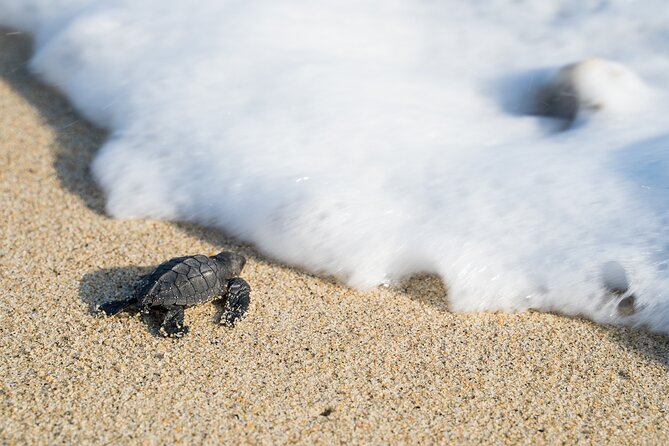
- Sunset turtle release: Release newly hatched sea turtles at Escobilla, often with time for photos and video.
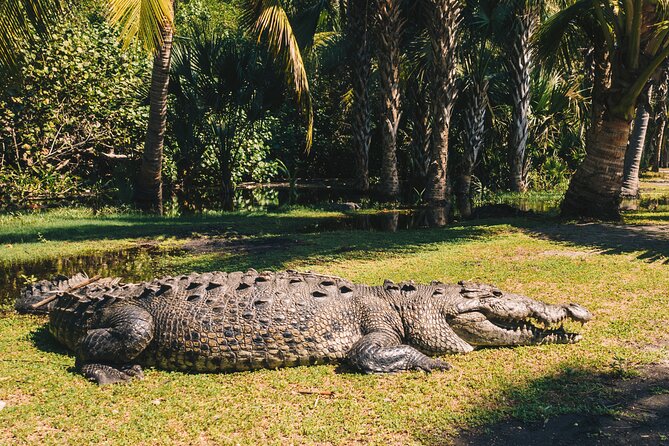
- Mangrove boat ride: Explore Laguna Ventanilla by boat and look for crocodiles, turtles, birds, iguanas, and other wildlife.
- Long rural journey: The drive from Huatulco includes rough roads, curves, construction, and a return after sunset.
- Extra cash required: The tour price is $42 per person, but entrance fees are extra: MX$250 for Ventanilla and MX$300 for Escobilla.
- Season matters: From August to early November, turtle releases and sightings are uncommon because it is outside the main nesting period.
- Small-group format: The maximum group size is 20 people, with hotel pickup in Huatulco’s urban area.
Why this Huatulco nature trip is worth your time
This tour joins two conservation settings that feel quite different. Ventanilla shows you a living mangrove system, while Escobilla focuses on sea turtles and the work of protecting their nests and hatchlings.
I like that the day is not built around a single animal encounter. You may see crocodiles from a boat, birds perched around the lagoon, iguanas, turtles, and other wildlife before the turtle release begins. The result is a fuller picture of coastal Oaxaca, where mangroves, beaches, forests, and human conservation groups all depend on one another.
The tour also gives you a direct way to support local conservation. Your entrance fees help fund the community-run work at both sites. At Ventanilla, money supports the lagoon and mangrove area. At Escobilla, it supports the turtle sanctuary and the people who protect the nesting beach.
The value depends on your expectations. At $42 per person, the tour price is modest for a six to seven-hour outing with hotel transport, an air-conditioned vehicle, and a bilingual guide. But you must add MX$550 per person in entrance fees, plus your own food and drinks. The true cost is therefore higher than the advertised tour price, though still reasonable for a full day of transport and two conservation visits.
More places to swim with turtles near Huatulco:
- From Huatulco: Turtle Release & Bioluminescence
★ 4.5 · 51 reviews - Half-Day Sea Turtle and Cenote Snorkeling Tour from Cancun & Riviera Maya
★ 5.0 · 2,039 reviews - Tulum Ruins, Turtles in Akumal and Cenote tour
★ 5.0 · 1,706 reviews
The long road from Huatulco
Pickup begins around 1:30 pm from hotels in Huatulco’s urban area. The vehicle is air-conditioned, which matters in Oaxaca’s heat, but the journey itself is not a small detail. Ventanilla and Escobilla are outside the resort zone, and reaching them takes time.
Road conditions can include curves, rough sections, and construction. If you get carsick, this is worth taking seriously. Bring any medicine you normally use, sit where the ride feels easiest, and avoid treating the outing as a quick half-day activity.
The long ride does have one benefit: a good guide can turn the drive into part of the experience. Guides such as Luis, Victor, Abel, Roger, and Rogelio have been praised for safe driving, clear explanations, patience, and help with English translation. The exact guide varies, but the service is offered in English and Spanish.
The group limit is 20 people. That is large enough to keep the price down but small enough for the guide to help with questions and practical needs. One guide even stopped to help a couple reach an ATM, while another offered a hat when a passenger was struggling with the sun. Those small acts matter on a long day outdoors.
Laguna Ventanilla by boat
The first major stop is Laguna Ventanilla, a mangrove area where the visit usually lasts about two hours. The outing includes a boat ride through the lagoon and time around an island or protected area where animals can be seen at closer range.
The mangroves are not just scenic plants along the water. They protect the coast from erosion, help form soil, moderate heat and humidity, and provide breeding and feeding areas for land and water species. Your guide may explain how the system supports crocodiles, birds, turtles, iguanas, and many other animals.
The wildlife is the reason to pay attention from the moment the boat leaves shore. You might see crocodiles lying near the water, turtles, kingfishers, woodpeckers, diving ducks, and several kinds of herons. The exact sightings depend on the day, weather, and animal activity, so this is wildlife watching rather than a guaranteed display.
The boat ride has been a high point for many people, especially the chance to see crocodiles in their natural setting. Some crocodiles are also kept in enclosures because they are rescues. Young crocodiles may be present in a protected area, and the guides explain their behavior and social order.
I appreciate the conservation message here. You are not simply looking at an animal behind a fence. You are seeing the relationship between a wetland, its wildlife, and the local people who care for it. The community also works on mangrove restoration, an important task after hurricane damage reduced much of the mangrove cover.
The walking portions may be uneven or hot. If you have trouble walking, tell your guide early. One guide was praised for adjusting the pace and helping a companion who could not keep up. Still, this is not the place for flip-flops that slide around. Sand shoes or sturdy comfortable footwear will serve you better.
Escobilla Sanctuary and the turtle release
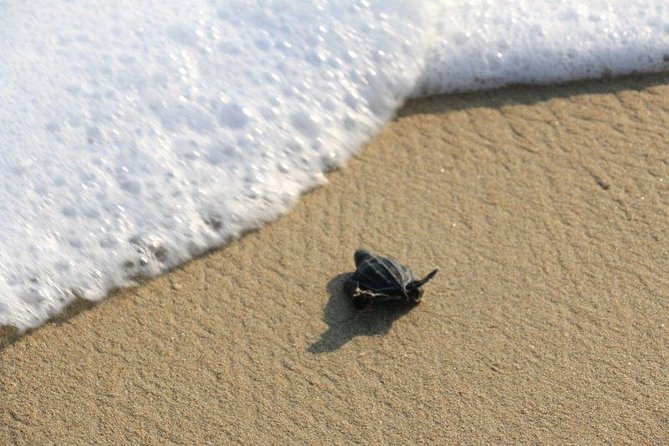
After Ventanilla, the tour continues to Santuario La Escobilla. The beach stretches for about 25 kilometers along the coast of Santa María Tonameca. Escobilla is one of Mexico’s most important sea turtle nesting areas by volume, and the sanctuary protects turtles that arrive here throughout the year.
The timing of the visit is built around dusk. The turtle release is simple but powerful. You receive newly hatched turtles, usually in a container or bowl, and place them on the sand so they can crawl toward the sea. The moment can feel surprisingly personal, especially when you watch each small turtle work its way across the beach.
You should bring your phone or camera, but put the animals first. Keep a respectful distance, follow the sanctuary staff, and do not pick up a turtle after release unless staff specifically instruct you to do so. A turtle’s movement toward the water is part of the natural process.
The release is not a guarantee of survival. Only a small percentage of hatchlings reach adulthood, with one estimate given at around 3 percent. Predators, pollution, and habitat loss all make the journey difficult. That fact adds weight to the activity. You are not creating a safe future for one turtle simply by releasing it, but you are supporting a wider community effort to protect nesting beaches and improve the odds.
Sunset may also bring the best photographs of the day. The beach, low light, and small turtles make for memorable images, but you should expect limited time. The group may arrive close to sunset, and the release schedule depends on when hatchlings become available.
This is also where the tour can become crowded around the animals. Good supervision matters. Stay behind the staff line, watch your footing, and keep children close. A small turtle is easy to miss in the sand, and no photograph is worth stepping into its path.
Same base, a different sort of day:
- Tour to Copalitilla Magical Waterfalls from Huatulco with admission included
★ 5.0 · 359 reviews - Full Day Tour of the Bays of Huatulco
★ 4.5 · 217 reviews - Kayak Huatulco Sunrise
★ 5.0 · 166 reviews - Ocean Eco Adventure with Marine Biologist Guides
★ 5.0 · 149 reviews
Timing, meals, and what the schedule really means
The advertised duration is about six to seven hours, but you should allow more. A reported schedule ran from 1:30 pm until approximately 9:30 pm, especially when the tour included both the lagoon visit and the sunset release.
The late finish is not necessarily a problem, but it changes how you should plan your day. Do not book a dinner reservation immediately after the tour. Do not schedule an evening flight, show, or other activity. The road journey back to Huatulco can take time, and construction or rural road conditions may slow the return.
Lunch is not listed among the included services. One guide took a group to an excellent meal, and some outings may include a roadside food stop or a mezcal tasting, but these should not be treated as guaranteed parts of the package. Bring cash in pesos for food, drinks, and any optional stop.
Bottled water is not included. Pack your own bottle, along with a hat, sunglasses, sunscreen, insect repellent, and sand shoes. The sun can be strong at both stops, and mosquitoes are possible around the mangroves.
The entrance fees change the value
The tour costs $42 per person, but the two site fees are separate:
- Laguna Ventanilla: MX$250 per person
- Santuario La Escobilla: MX$300 per person
That adds MX$550 per person before food, drinks, or souvenirs. Bring pesos because cash is specifically recommended, and card payment cannot be assumed at rural conservation sites.
Even with the added fees, I see fair value here if you want both locations. You receive transportation from Huatulco, an air-conditioned vehicle, a bilingual guide, and a full afternoon and evening of wildlife viewing. If you only want a short beach activity, the cost in time may feel high. If you want a serious nature outing and are willing to spend the day on the road, it makes more sense.
The entrance payments also support local work, including habitat care, reconstruction, and conservation programs. That gives the extra cost a clearer purpose than a simple attraction surcharge.
Who will enjoy this outing most
I would recommend this tour to families with children who can manage a long day. Children aged 8 and 12 enjoyed the crocodile sightings and turtle release, and younger children have also taken part. The combination of boats, crocodiles, birds, and baby turtles keeps the day varied.
It also suits couples and friends who want a meaningful activity rather than a resort-only excursion. The turtle release is especially well suited to people who care about animals and want their tourism spending to support local conservation.
You should think twice if you dislike long vehicle rides, rough roads, heat, or uncertain schedules. The tour is not ideal for someone who needs a short, carefully timed outing. It may also be uncomfortable if you are prone to motion sickness.
People with limited mobility should ask about the walking portions before booking. Guides have helped participants who could not keep up, but the tour includes boat access, beach sand, outdoor heat, and uneven ground. Most people can participate, but the day is not fully accessible in the way a paved museum visit would be.
Practical tips for a better day
Pack light, but bring the things that protect you from sun, bugs, and sand. A small day bag is enough.
- Wear comfortable shoes or sand shoes.
- Bring a hat, sunscreen, sunglasses, and insect repellent.
- Carry a full bottle of water.
- Bring pesos for the MX$550 entrance fees and food.
- Keep your phone charged for photos and video.
- If you get carsick, prepare before departure.
- Leave your evening open because the return may be late.
- Follow staff instructions during the turtle release.
- Avoid August through early November if releasing turtles is your main reason for booking.
The season point deserves special attention. Conservation work continues all year, but from August to early November, turtle sightings are rare because it is outside the main nesting season. Releases during those months depend on wild turtle arrivals. Nature sets the schedule, not the tour company.
Cancellation and weather details
You can cancel for a full refund if you do so at least 24 hours before the start time. Changes or cancellations made inside that window are not accepted for a refund.
The activity requires good weather. If poor weather forces cancellation, you are offered another date or a full refund. The tour also requires a minimum number of participants, and if that number is not reached, you are offered another date, another experience, or a full refund.
Should you book the Escobilla and Ventanilla tour?
Book it if you want a full nature day with a real conservation focus. The Ventanilla boat trip gives you crocodiles, birds, mangrove ecology, and the chance to see wildlife in a natural wetland. Escobilla adds the emotional centerpiece, a sunset release of baby sea turtles into the Pacific.
I would not book it as a casual half-day outing. The roads can be rough, the schedule can stretch late, and the two entrance fees add a substantial extra cost in pesos. But if you prepare for the travel time, bring the right gear, and keep your evening free, this is one of the more memorable ways to see the coastal side of Oaxaca.
FAQ
How long does the tour last?
The stated duration is approximately six to seven hours, beginning around 1:30 pm. The return can be later, with one reported schedule ending around 9:30 pm, so keep your evening open.
What is included in the price?
The price includes transportation in an air-conditioned vehicle, hotel pickup within Huatulco’s urban area, and a bilingual guide.
What entrance fees are extra?
Laguna Ventanilla charges MX$250 per person, and Santuario La Escobilla charges MX$300 per person. These fees are not included in the tour price.
Are turtle releases available all year?
Conservation work continues year-round, but turtle sightings and releases are rare from August to early November because it is outside the main nesting season. Releases then depend on wild turtle arrivals.
What should I bring?
Bring a hat, sunscreen, insect repellent, sunglasses, a bottle of water, sand shoes, your phone or camera, and cash in pesos.
Is hotel pickup available?
Yes. Transportation is included for pickup within the urban area of Huatulco.
Just added in Huatulco
- Waterfall Experience★ 5.0 · 70 reviews
- Huatulco: Private Transfer Airport – Hotels★ 4.5 · 93 reviews
- Tour in Huatulco and Playa La Entrega★ 5.0 · 30 reviews
- Seafood Cooking Class★ 5.0 · 38 reviews
- Traditional Mexican Cooking Class★ 5.0 · 90 reviews
- Private One-Way or Roundtrip Transportation to Huatulco Hotels★ 4.5 · 32 reviews
- Private Tour Seven Bays, Huatulco HT★ 5.0 · 44 reviews
- Huatulco Airport: Shared Transfer to/from Huatulco Hotels★ 4.5 · 60 reviews
Turtle Snorkeling Tours, compared.
Half-Day Sea Turtle and Cenote Snorkeling Tour from Cancun & Riviera Maya
Read our review →
Tulum Ruins, Turtles in Akumal and Cenote tour
Read our review →
5-in-1 Cancun Snorkeling: Turtles, Reef, Musa, Shipwreck, Cenote
Read our review →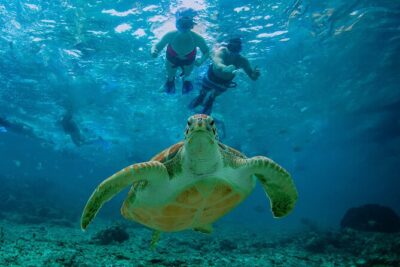
Hidden Cenote Swim: Snorkeling, Sea Turtles and Beachside Lunch
Read our review →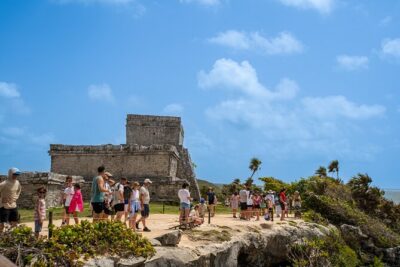
Full Day Tulum Ruins Tour Cenote and Swimming with Sea Turtles
Read our review →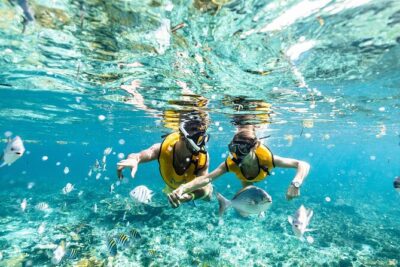
With Turtles, Shipwreck, Cenote, and Reef and Transport Included
Read our review →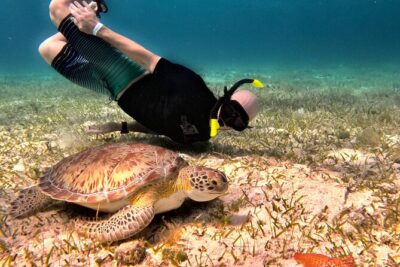
4 Hour Cozumel Turtle Sanctuary Experience on a Luxury Catamarán
Read our review →Browse the lists this tour appears in